
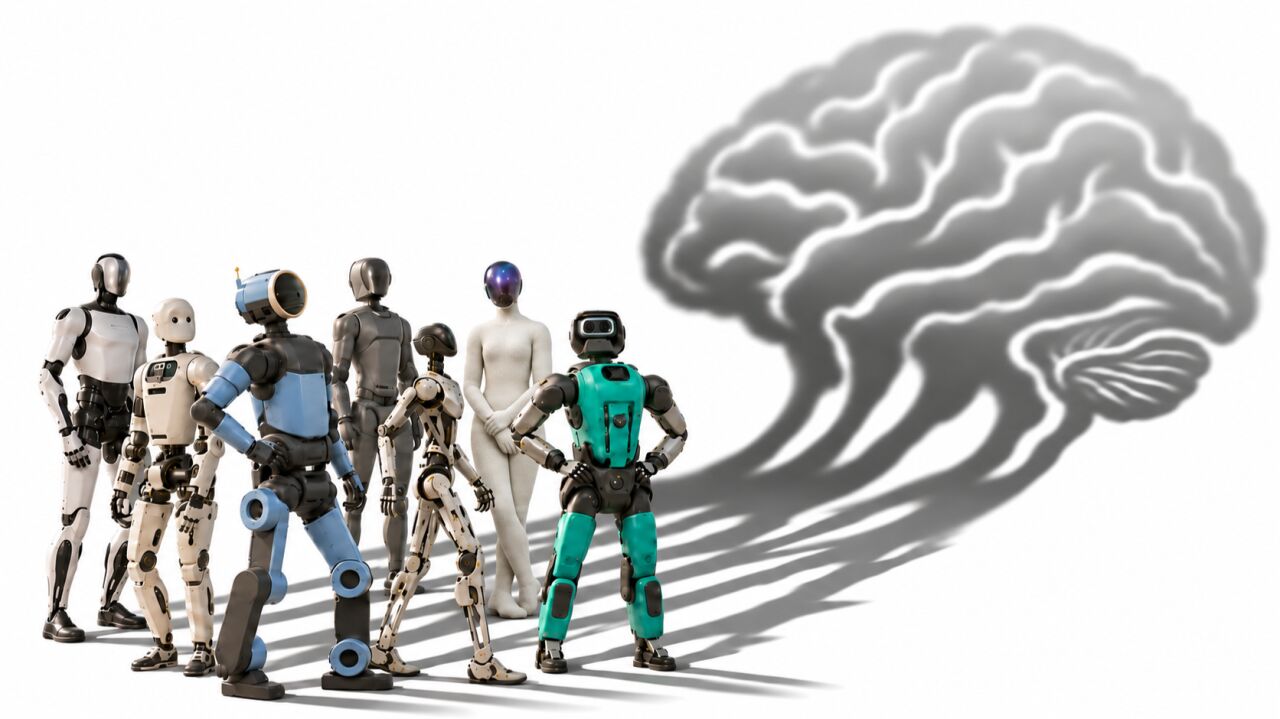
Researchers have found that large language models, the AI models behind ChatGPT, Claude and Gemini, can also serve as brains for robots. They help robots understand instructions, make sense of their surroundings and decide what to do next. As these models become smarter, robots have the potential to become more capable. Meanwhile, researchers are also developing AI models specifically designed for robots. Both approaches have made significant progress in recent months.
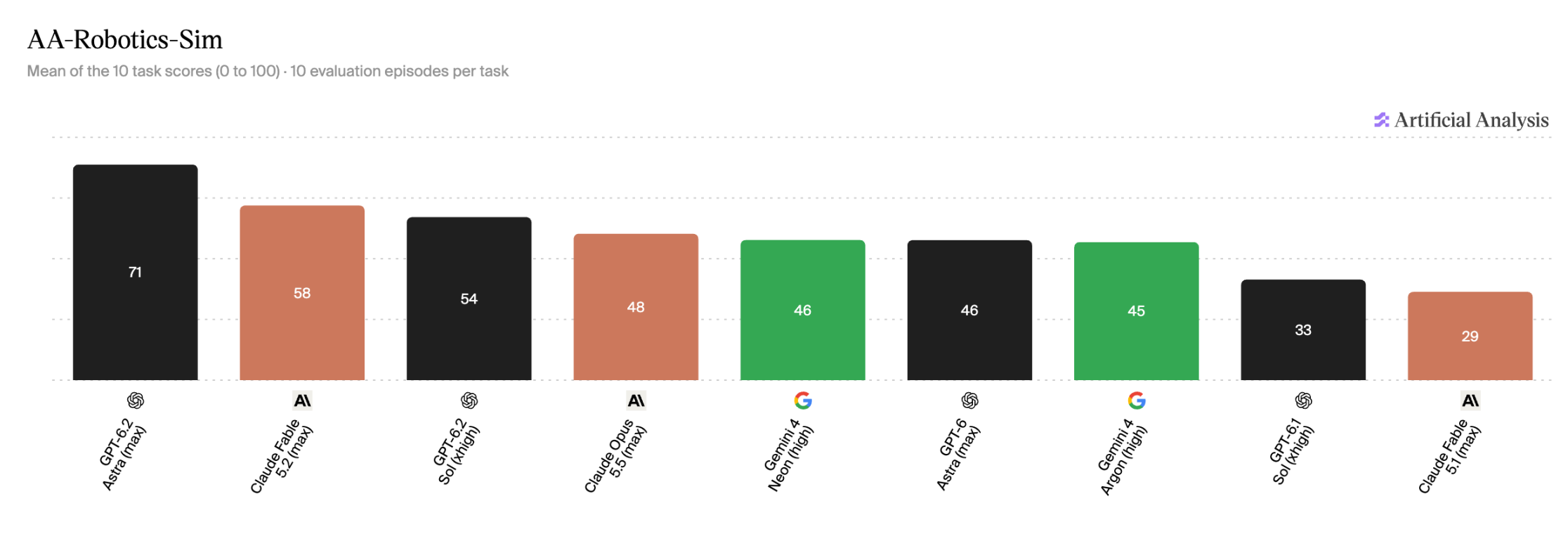
A recent benchmark from Artificial Analysis shows how quickly general-purpose AI models are improving at controlling robots. In a series of simulated humanoid robot tasks, GPT-6.2 Astra scored 71 out of 100, up from 46 for its predecessor, while Claude Fable 5.2 nearly doubled its predecessor's score.
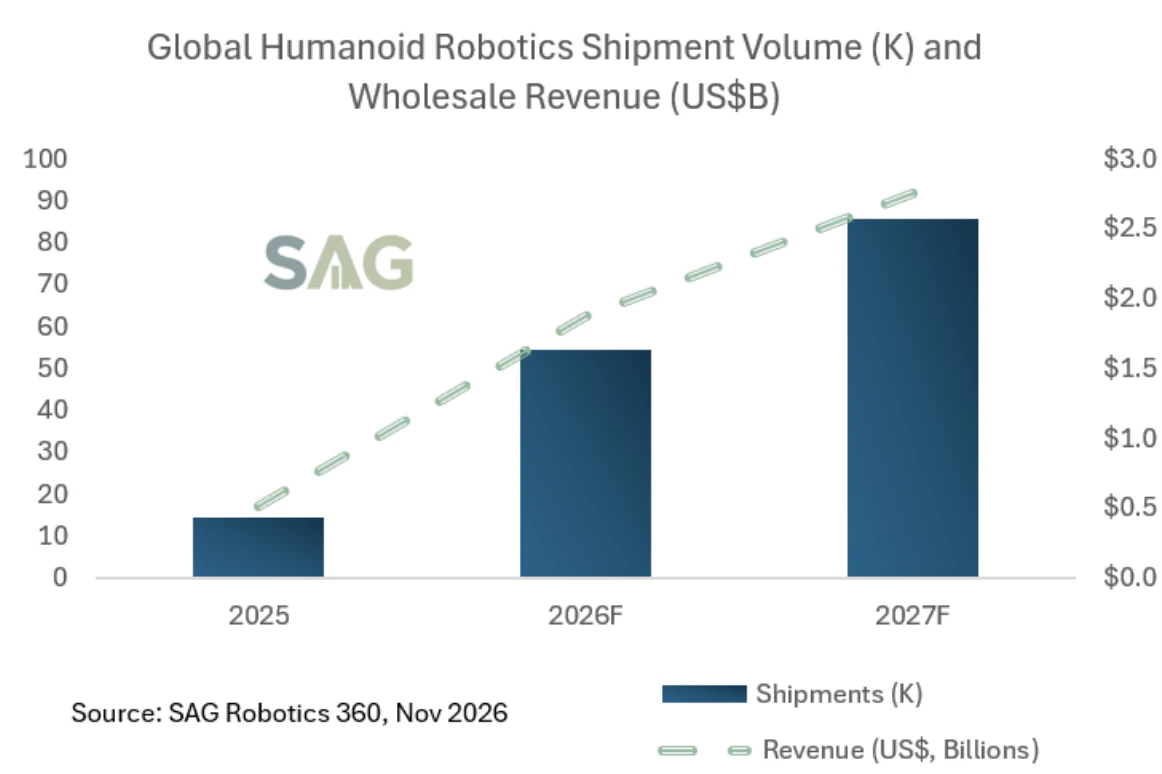
At the same time, humanoid robot production is rapidly scaling up. Industry research firm Smart Analytics Global (SAG) forecasts global humanoid robot shipments to reach approximately 54,000 units in 2026 and 86,000 units in 2027, an increase of 59% year over year.
The brains are getting smarter, and more bodies are being built. In this article, we'll explore the latest advances in robot brains and how they could shape the future of robotics.
What is a robot brain?
A robot brain is the software that helps a robot understand its surroundings, decide what to do, and turn those decisions into physical actions. When someone asks a robot to pick up a cup, the brain reads the camera feed, locates the cup, and tells the arm and fingers how to move.
For decades, engineers wrote robot instructions for every movement by hand. Each new task or new robot meant starting over. Hand-written code works well on an assembly line where every part stops in the exact same spot. But it fails when an object shifts an inch or the job changes.
Newer robot brains learn differently. Instead of following fixed rules, one large model studies thousands of examples and picks up general patterns. Engineers call the robotics version a vision-language-action model (often called a VLA model), because it takes in camera views and spoken instructions and outputs physical actions. Once trained, a single model can handle many tasks across different robots.
Can general-purpose large language models drive a robot?
Yes, for simple tasks, and slowly.
General-purpose LLMs that power ChatGPT, Gemini, and Claude were not built for robots originally. But researchers recently found they can be used for robots. In September, an independent testing group called Robocurve connected OpenAI's GPT-6 Astra and Anthropic's Fable models directly to two robot arms and three cameras. The models looked at the camera images and chose where each gripper should move next. This experiment showed that large language models can be used to power robots.
Major AI labs are running similar experiments. Anthropic tested Claude on physical robots in July. In October, Google researchers tested its general model, Gemini 4 Argon. The model watched a video of a person playing cornhole, built a physics simulation on its own, and trained a throwing program inside that simulation.
Results like these help explain OpenAI's decision in November to fold its stand-alone robotics team into its core research group. The company is betting that the general models behind ChatGPT will eventually control full robots, and it plans to show its own humanoid in 2027.
Speed remains the main obstacle for LLM as the robot brain. Reasoning through every small reach takes heavy computing power. In an October benchmark run by Artificial Analysis, chatbot models needed about 30 minutes to finish a sorting task that a person completes in roughly 20 seconds.
What about brains built just for robots?
Using a chatbot model is one way to run a robot. Much of the industry is pursuing a second option: specialist brains trained from day one to control physical bodies. Purpose-built models react much faster and are further along in real workplaces. Over the second half of 2026, they gained four notable abilities.
They can move a whole body.
Earlier robot models controlled only arms or an upper torso. In July, Google DeepMind introduced Gemini Robotics 2, its first model built to steer a humanoid from feet to fingertips. Robots running it can walk across a floor and work alongside other machines. In November, Google began piloting an updated version, Gemini Robotics 2.5, on Apptronik's Apollo humanoids along Mercedes-Benz production lines to sort car parts. Google reported a 96% success rate in pilot testing.
They can learn from a single example.
Teaching a robot a new skill usually requires a person to steer its arms by remote control hundreds of times. In August, California startup Generalist AI showed its GEN-1.5 model a task once, in a clip lasting 3 to 12 seconds. Trying the job alone, the robot succeeded about six times in ten, and five minutes of practice examples pushed its success rate past 80%. Days later, Pittsburgh startup Skild AI released S1, which learns from one video to complete longer routines like making pour-over coffee.
They can work in unfamiliar places.
Useful robots have to handle rooms outside a research lab. US humanoid maker Figure sent robots into 30 homes they had never visited to tidy living rooms, fold towels, and make beds. They finished the full job a little over half the time, and Figure released its upgraded Helix 2.5 brain in September. San Francisco startup Physical Intelligence also showed a robot operating an air fryer it had barely encountered before.
They can learn by watching people.
Collecting remote-controlled robot data is slow and expensive, while videos of people working with their hands are plentiful. In November, chipmaker NVIDIA openly released GR00T 2, a robot brain that outside robot makers can adapt for arms, hands, and humanoids. NVIDIA trained it largely on videos of people doing ordinary work so the model could learn how objects move. Robotics companies including 1X, AGIBOT, and Unitree are building video-trained brains in a similar way.
How do the two approaches fit together?
In practice, most capable robots will likely run both kinds of brains at once.
A chatbot-style model works well as a high-level planner. Even though it thinks slowly, it understands spoken requests, breaks a complex job into steps, and notices when something goes wrong. Inside the robot, a faster specialist brain handles the actual balancing, reaching, and gripping.
Google DeepMind already splits the work this way. Alongside its movement controllers, it runs a planning model called Gemini Robotics ER 2, short for embodied reasoning. ER 2 watches through the cameras, tracks progress across a multi-step task, and coordinates several robots on shared jobs. If a robot drops an item or misses a latch, ER 2 directs it to repeat just that step rather than starting over.
Looking ahead
Robot brains will keep getting smarter, whether they use the same general-purpose AI models, models built specifically for robots, or a combination of the two. At the same time, humanoid robot production is rapidly scaling up. Industry analysts expect service and factory work to become the most common uses for humanoid robots within five years.
The day we see robots walking around in our workplaces, homes and public spaces may come sooner than we expect. As that day approaches, making robots safe and reliable enough to live and work alongside us will become increasingly important. It will be fascinating to see how this unfolds.
Enjoyed this article?
Subscribe to FutureTech
Biweekly AI & tech insights for 1,700+ readers.
Delivered by Substack. Unsubscribe anytime.