
1M
NVDA$216.12-0.7%
MSFT$481.15-0.7%
GOOGL$338.95-1.7%
AAPL$316.59-0.1%
AMZN$260.75-1.9%
META$542.98-0.6%
TSLA$343.75-2.1%
IBM$237.25+0.0%
CRM$207.70+0.8%
AMD$461.44-1.1%
AVGO$363.58+0.3%
ARM$245.41-1.6%
TSM$413.47+0.3%
INTC$91.20-1.7%
QCOM$163.33+0.9%
MU$954.45+1.9%
CSCO$110.75+0.2%
ANET$185.25-0.6%
SMCI$35.78-2.2%
ORCL$141.72-1.5%
PLTR$174.65-0.3%
DELL$434.72-0.6%
HPE$53.37+0.5%
PSTG$112.00-4.3%
ALAB$284.72-1.5%
AMAT$491.39-1.0%
LRCX$307.01-0.1%
KLAC$186.02-0.7%
ASML$1,753.91+0.1%
TER$379.23-0.1%
GEV$956.75-3.1%
CEG$275.01+0.3%
UEC$11.06-4.9%
OKLO$41.16-4.1%
SMR$8.82-5.1%
BWXT$158.03-2.6%
VST$139.86-2.0%
D$68.06-0.3%
SO$92.37+0.2%
NEE$85.24-0.8%
CCJ$95.04-3.0%
LEU$174.36-5.1%
BE$197.86-4.2%
KMI$31.71-1.2%
EXC$45.73+0.9%
VRT$256.66-1.7%
ETN$418.96-1.3%
CAT$807.11-1.1%
PWR$670.56-1.0%
EME$791.63-1.8%
URI$1,100.38-1.5%
VMC$273.28-1.1%
J$148.34+0.7%
TT$454.45-0.2%
CARR$60.66-0.9%
JCI$144.97+0.0%
SIEGY$161.18+0.8%
ALB$135.22+0.7%
SQM$77.51+2.8%
LAC$2.93-2.3%
MP$53.46-5.7%
FCX$69.38+0.4%
GLW$150.18-1.5%
SCCO$195.55+0.4%
AA$49.82-3.3%
RIO$102.17+1.7%
VALE$14.24+2.4%
LYSDY$11.58+0.9%
EQIX$1,077.83+0.1%
DLR$194.54+1.1%
AMT$177.10+1.5%
LITE$855.12+3.3%
COHR$284.54-1.0%
CIEN$394.90-1.1%
IRM$122.37+0.2%
CCI$76.03+1.8%
MDB$424.00-3.8%
ADBE$273.08+0.2%
RIVN$15.87+0.9%
DDOG$232.89-0.3%
SNOW$320.36-1.4%
NOW$130.35+2.5%
PATH$15.82+0.3%
CRWD$193.51-4.0%
NVDA$216.12-0.7%
MSFT$481.15-0.7%
GOOGL$338.95-1.7%
AAPL$316.59-0.1%
AMZN$260.75-1.9%
META$542.98-0.6%
TSLA$343.75-2.1%
IBM$237.25+0.0%
CRM$207.70+0.8%
AMD$461.44-1.1%
AVGO$363.58+0.3%
ARM$245.41-1.6%
TSM$413.47+0.3%
INTC$91.20-1.7%
QCOM$163.33+0.9%
MU$954.45+1.9%
CSCO$110.75+0.2%
ANET$185.25-0.6%
SMCI$35.78-2.2%
ORCL$141.72-1.5%
PLTR$174.65-0.3%
DELL$434.72-0.6%
HPE$53.37+0.5%
PSTG$112.00-4.3%
ALAB$284.72-1.5%
AMAT$491.39-1.0%
LRCX$307.01-0.1%
KLAC$186.02-0.7%
ASML$1,753.91+0.1%
TER$379.23-0.1%
GEV$956.75-3.1%
CEG$275.01+0.3%
UEC$11.06-4.9%
OKLO$41.16-4.1%
SMR$8.82-5.1%
BWXT$158.03-2.6%
VST$139.86-2.0%
D$68.06-0.3%
SO$92.37+0.2%
NEE$85.24-0.8%
CCJ$95.04-3.0%
LEU$174.36-5.1%
BE$197.86-4.2%
KMI$31.71-1.2%
EXC$45.73+0.9%
VRT$256.66-1.7%
ETN$418.96-1.3%
CAT$807.11-1.1%
PWR$670.56-1.0%
EME$791.63-1.8%
URI$1,100.38-1.5%
VMC$273.28-1.1%
J$148.34+0.7%
TT$454.45-0.2%
CARR$60.66-0.9%
JCI$144.97+0.0%
SIEGY$161.18+0.8%
ALB$135.22+0.7%
SQM$77.51+2.8%
LAC$2.93-2.3%
MP$53.46-5.7%
FCX$69.38+0.4%
GLW$150.18-1.5%
SCCO$195.55+0.4%
AA$49.82-3.3%
RIO$102.17+1.7%
VALE$14.24+2.4%
LYSDY$11.58+0.9%
EQIX$1,077.83+0.1%
DLR$194.54+1.1%
AMT$177.10+1.5%
LITE$855.12+3.3%
COHR$284.54-1.0%
CIEN$394.90-1.1%
IRM$122.37+0.2%
CCI$76.03+1.8%
MDB$424.00-3.8%
ADBE$273.08+0.2%
RIVN$15.87+0.9%
DDOG$232.89-0.3%
SNOW$320.36-1.4%
NOW$130.35+2.5%
PATH$15.82+0.3%
CRWD$193.51-4.0%
NVDA$216.12-0.7%
MSFT$481.15-0.7%
GOOGL$338.95-1.7%
AAPL$316.59-0.1%
AMZN$260.75-1.9%
META$542.98-0.6%
TSLA$343.75-2.1%
IBM$237.25+0.0%
CRM$207.70+0.8%
AMD$461.44-1.1%
AVGO$363.58+0.3%
ARM$245.41-1.6%
TSM$413.47+0.3%
INTC$91.20-1.7%
QCOM$163.33+0.9%
MU$954.45+1.9%
CSCO$110.75+0.2%
ANET$185.25-0.6%
SMCI$35.78-2.2%
ORCL$141.72-1.5%
PLTR$174.65-0.3%
DELL$434.72-0.6%
HPE$53.37+0.5%
PSTG$112.00-4.3%
ALAB$284.72-1.5%
AMAT$491.39-1.0%
LRCX$307.01-0.1%
KLAC$186.02-0.7%
ASML$1,753.91+0.1%
TER$379.23-0.1%
GEV$956.75-3.1%
CEG$275.01+0.3%
UEC$11.06-4.9%
OKLO$41.16-4.1%
SMR$8.82-5.1%
BWXT$158.03-2.6%
VST$139.86-2.0%
D$68.06-0.3%
SO$92.37+0.2%
NEE$85.24-0.8%
CCJ$95.04-3.0%
LEU$174.36-5.1%
BE$197.86-4.2%
KMI$31.71-1.2%
EXC$45.73+0.9%
VRT$256.66-1.7%
ETN$418.96-1.3%
CAT$807.11-1.1%
PWR$670.56-1.0%
EME$791.63-1.8%
URI$1,100.38-1.5%
VMC$273.28-1.1%
J$148.34+0.7%
TT$454.45-0.2%
CARR$60.66-0.9%
JCI$144.97+0.0%
SIEGY$161.18+0.8%
ALB$135.22+0.7%
SQM$77.51+2.8%
LAC$2.93-2.3%
MP$53.46-5.7%
FCX$69.38+0.4%
GLW$150.18-1.5%
SCCO$195.55+0.4%
AA$49.82-3.3%
RIO$102.17+1.7%
VALE$14.24+2.4%
LYSDY$11.58+0.9%
EQIX$1,077.83+0.1%
DLR$194.54+1.1%
AMT$177.10+1.5%
LITE$855.12+3.3%
COHR$284.54-1.0%
CIEN$394.90-1.1%
IRM$122.37+0.2%
CCI$76.03+1.8%
MDB$424.00-3.8%
ADBE$273.08+0.2%
RIVN$15.87+0.9%
DDOG$232.89-0.3%
SNOW$320.36-1.4%
NOW$130.35+2.5%
PATH$15.82+0.3%
CRWD$193.51-4.0%
Back to Articles
AI AgentsFuture of WorkAnthropicOpenAIGoogleProductivity

AI Agents Are Moving Into Everyday Work

The latest AI products can research, use tools, work across files, and stay with a project for hours. The shift from answering questions to completing workflows could change how knowledge work gets done — and which parts of your job an agent can handle.

Yanyan Wang
Yanyan Wang
Jul 20, 2026 • 5 min read
AI Agents Are Moving Into Everyday Work

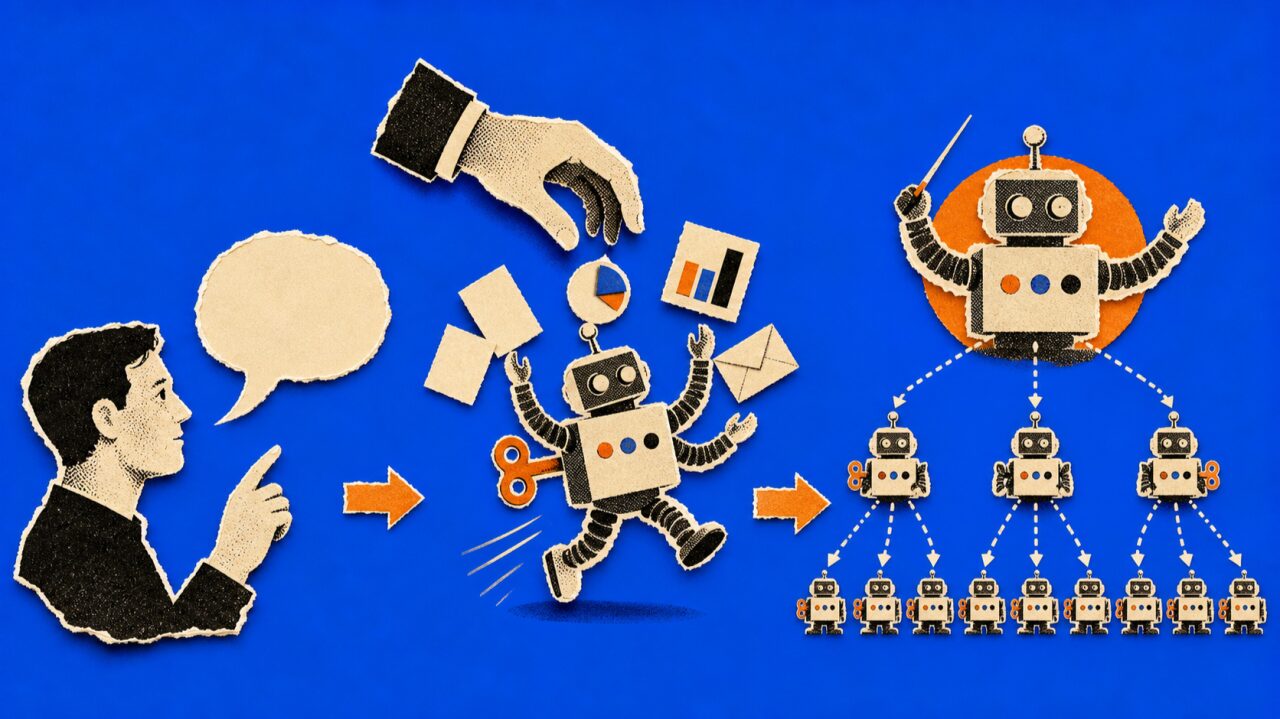
Most people still use AI one task at a time. You ask ChatGPT, Claude, or Gemini to summarize a document, draft an email, or explain a topic. It gives you an answer, and you handle the rest of the work yourself. AI agents can take on a larger assignment. You describe the result you need, and the agent works through the steps for you.

What Is an AI Agent?

An AI model can understand instructions, reason, and generate content. An agent is that model plus tools, memory, and access to a working environment. The chat box looks the same. The difference is how much work happens behind it.

Here is a concrete example. A chatbot can help with individual parts of a presentation, such as researching the topic, drafting the text, or analyzing a file. An AI agent can connect those steps into one assignment. You can ask it to gather information, review your files, analyze the data, create charts, assemble an editable PowerPoint, and return the deck for you to review.

AI Agents First Took Off in Coding

Agents proved themselves first in software development. Tools like Claude Code and OpenAI Codex can read an entire project, edit files, run tests, find problems, and fix their own work.

Coding was a natural fit because it gives the agent fast, clear feedback. A program either runs or it crashes, so AI can test its work without waiting for a manager. Most business work is harder to judge. A strategy recommendation or market analysis has no simple pass-or-fail test. It needs context and human judgment, and that keeps you in the loop.

Claude Code now produces an estimated 4% of all changes to public projects on GitHub, the world's largest library of code, and it writes about 90% of its own code.

Moving Into Everyday Work

Coding turned out to be a springboard for everything else. Now every major AI company is bringing agentic tools into everyday work. Anthropic, OpenAI, and Google have each released an agent built for office work within a couple of months. Here is how fast it happened.
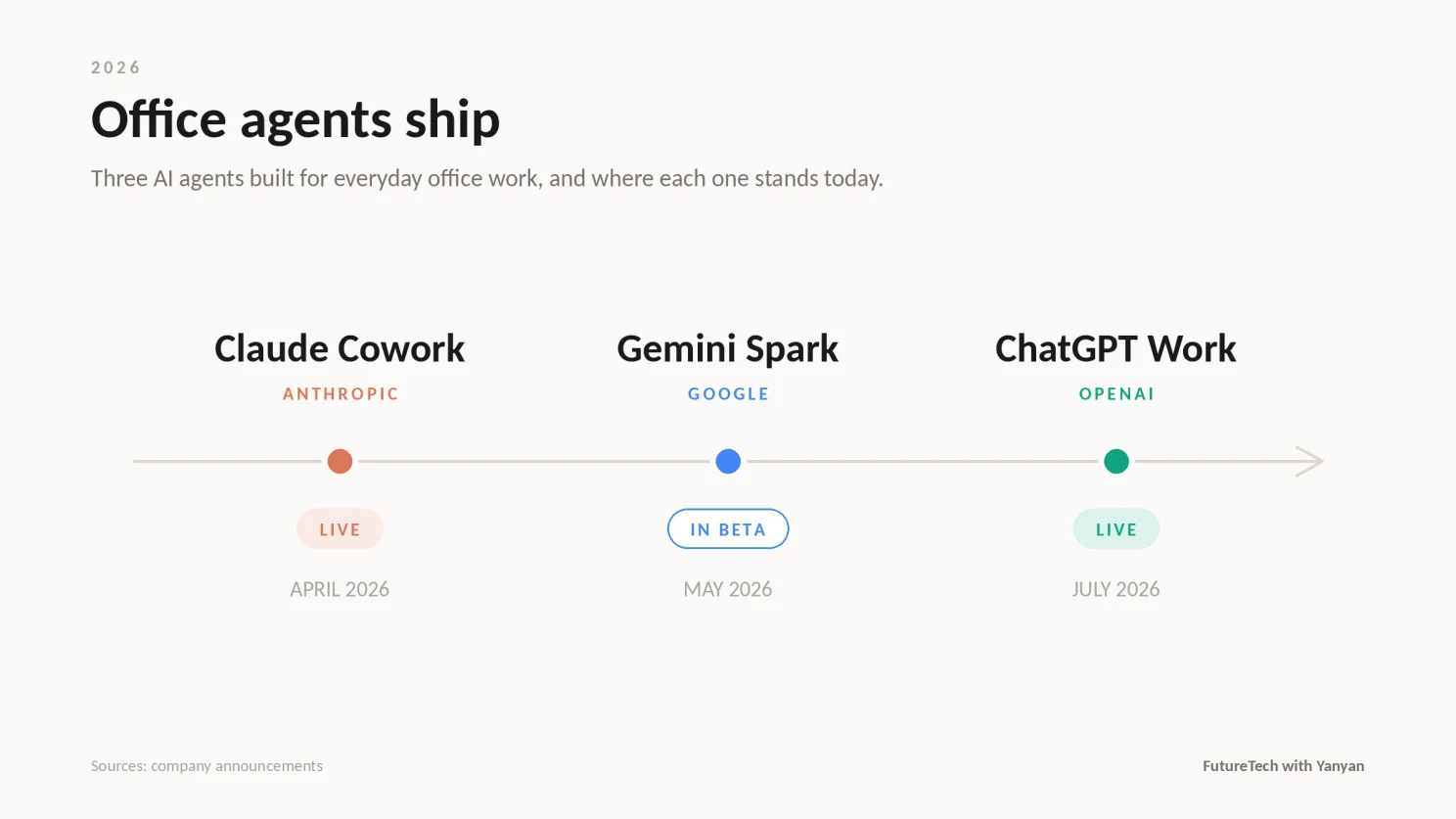
Timeline titled "Office agents ship": Anthropic's Claude Cowork live in April 2026, Google's Gemini Spark in beta in May 2026, and OpenAI's ChatGPT Work live in July 2026

Anthropic's Claude Cowork

Anthropic Claude Cowork brand graphic: a white lightning bolt with a black connected-node line inside, on an orange background

Cowork is like giving Anthropic's AI assistant, Claude, a desk in your office. You point it at a working folder, connect your tools and browsers, and hand off the task end to end. Claude Cowork entered preview in January and became generally available in April.

OpenAI's ChatGPT Work
OpenAI ChatGPT Work announcement graphic: the ChatGPT Work wordmark on a starfield background

OpenAI's ChatGPT Work was launched in July 2026. It can research a topic, pull from your connected apps and files, and produce documents, spreadsheets, presentations, and simple websites. Its Scheduled Tasks can repeat a job on a schedule or watch for changes while you focus on something else.

Google's Gemini Spark

Google I/O logo rendered in Google brand colors on a black background

Gemini Spark runs in Google's cloud. Announced at Google's annual developer conference on May 19, it keeps working after you close your laptop. Assign a task on Friday evening and it works through the weekend.

So what could you hand over? A strategy manager could ask for market research and a first-draft recommendation. A salesperson could get a meeting briefing built from emails, account records, and recent news. A marketing manager could have campaign results reviewed and a weekly report kept current. The common thread is time: less of it spent gathering information, moving it between apps, and shaping it into something usable.

What This Means for Your Work

Agents will touch more than routine, repetitive tasks. They can help with one-off assignments too: research, analysis, writing, planning, coordination.

The bigger shift is that you may not need to do every step yourself. You give the agent a goal, provide the context, and review what comes back. That could make one person capable of much more. It could also reduce the value of roles built mainly on gathering information, writing first drafts, and coordinating between teams.

Your value moves toward the parts an agent can't own: deciding what's worth doing, knowing the business, judging whether the work is good, and taking responsibility for the final call.

The Risks

Agents make mistakes. One can grab the wrong file, misread an instruction, or build every later step on an early error. And once it has access to your email, company data, and business apps, those mistakes carry real consequences.

That's why these products lean on permissions, visible progress, and approvals before important actions. A simple rule: the more access an agent has, the more carefully you should review its work.

What Happens Next

Agents will get more useful as they connect to more tools and more of your company's information, and businesses will learn which workflows are safe to hand over.

For you, the skill that matters most is clear delegation to AI: Define the outcome, share the right context, set boundaries, and review the result. Then start figuring out which parts of your job an agent can handle, and where your judgment still matters.

Enjoyed this article?

Subscribe to FutureTech

Biweekly AI & tech insights for 1,700+ readers.

Delivered by Substack. Unsubscribe anytime.