1M
NVDA$207.14+3.2%
MSFT$486.19+4.6%
GOOGL$375.19+5.4%
AAPL$303.05-1.9%
AMZN$285.86+5.3%
META$593.44+6.6%
TSLA$323.64+4.0%
IBM$226.69+1.4%
CRM$188.81+2.6%
AMD$480.57+0.9%
AVGO$388.72-0.1%
ARM$236.96-1.1%
TSM$403.29-0.2%
INTC$90.31+0.1%
QCOM$149.23+1.1%
MU$815.37-0.9%
CSCO$115.21-0.7%
ANET$181.33+0.5%
SMCI$28.45+0.2%
ORCL$137.58+5.9%
PLTR$125.14+1.7%
DELL$417.14+2.9%
HPE$49.03+2.4%
PSTG$77.17+2.8%
ALAB$317.11+1.9%
AMAT$511.65+0.8%
LRCX$290.96-0.7%
KLAC$179.81-1.6%
ASML$1,635.04+0.4%
TER$362.31-1.5%
GEV$997.86+0.8%
CEG$272.41+3.7%
UEC$9.82+2.3%
OKLO$41.30+6.4%
SMR$8.92+5.9%
BWXT$172.80+2.4%
VST$153.96+3.9%
D$68.80-0.5%
SO$94.22-0.3%
NEE$86.33-0.7%
CCJ$89.54+3.7%
LEU$183.35+3.6%
BE$217.12+5.5%
KMI$31.66-1.6%
EXC$45.68-0.3%
VRT$258.15+6.9%
ETN$432.93+4.3%
CAT$823.61+1.1%
PWR$674.29+1.0%
EME$814.20+2.1%
URI$1,103.76+2.3%
VMC$278.76+3.8%
J$138.17+2.4%
TT$461.02+1.3%
CARR$62.65+1.4%
JCI$146.68+0.0%
SIEGY$162.90-0.1%
ALB$119.04+1.2%
SQM$66.71-0.5%
LAC$2.97+3.5%
MP$43.73+5.7%
FCX$63.24+1.0%
GLW$145.80+5.5%
SCCO$185.35+1.4%
AA$44.55-1.6%
RIO$95.41-1.5%
VALE$14.57-3.3%
LYSDY$9.80-1.4%
EQIX$1,024.62+0.5%
DLR$191.93+1.8%
AMT$174.17+0.5%
LITE$761.92+6.7%
COHR$287.52+9.4%
CIEN$383.36+1.7%
IRM$124.97+2.2%
CCI$78.36+2.7%
MDB$357.81+6.0%
ADBE$253.37+1.2%
RIVN$15.58+2.4%
DDOG$275.55+2.8%
SNOW$312.84+6.7%
NOW$114.95+3.3%
PATH$13.02+2.0%
CRWD$197.10+3.3%
NVDA$207.14+3.2%
MSFT$486.19+4.6%
GOOGL$375.19+5.4%
AAPL$303.05-1.9%
AMZN$285.86+5.3%
META$593.44+6.6%
TSLA$323.64+4.0%
IBM$226.69+1.4%
CRM$188.81+2.6%
AMD$480.57+0.9%
AVGO$388.72-0.1%
ARM$236.96-1.1%
TSM$403.29-0.2%
INTC$90.31+0.1%
QCOM$149.23+1.1%
MU$815.37-0.9%
CSCO$115.21-0.7%
ANET$181.33+0.5%
SMCI$28.45+0.2%
ORCL$137.58+5.9%
PLTR$125.14+1.7%
DELL$417.14+2.9%
HPE$49.03+2.4%
PSTG$77.17+2.8%
ALAB$317.11+1.9%
AMAT$511.65+0.8%
LRCX$290.96-0.7%
KLAC$179.81-1.6%
ASML$1,635.04+0.4%
TER$362.31-1.5%
GEV$997.86+0.8%
CEG$272.41+3.7%
UEC$9.82+2.3%
OKLO$41.30+6.4%
SMR$8.92+5.9%
BWXT$172.80+2.4%
VST$153.96+3.9%
D$68.80-0.5%
SO$94.22-0.3%
NEE$86.33-0.7%
CCJ$89.54+3.7%
LEU$183.35+3.6%
BE$217.12+5.5%
KMI$31.66-1.6%
EXC$45.68-0.3%
VRT$258.15+6.9%
ETN$432.93+4.3%
CAT$823.61+1.1%
PWR$674.29+1.0%
EME$814.20+2.1%
URI$1,103.76+2.3%
VMC$278.76+3.8%
J$138.17+2.4%
TT$461.02+1.3%
CARR$62.65+1.4%
JCI$146.68+0.0%
SIEGY$162.90-0.1%
ALB$119.04+1.2%
SQM$66.71-0.5%
LAC$2.97+3.5%
MP$43.73+5.7%
FCX$63.24+1.0%
GLW$145.80+5.5%
SCCO$185.35+1.4%
AA$44.55-1.6%
RIO$95.41-1.5%
VALE$14.57-3.3%
LYSDY$9.80-1.4%
EQIX$1,024.62+0.5%
DLR$191.93+1.8%
AMT$174.17+0.5%
LITE$761.92+6.7%
COHR$287.52+9.4%
CIEN$383.36+1.7%
IRM$124.97+2.2%
CCI$78.36+2.7%
MDB$357.81+6.0%
ADBE$253.37+1.2%
RIVN$15.58+2.4%
DDOG$275.55+2.8%
SNOW$312.84+6.7%
NOW$114.95+3.3%
PATH$13.02+2.0%
CRWD$197.10+3.3%
NVDA$207.14+3.2%
MSFT$486.19+4.6%
GOOGL$375.19+5.4%
AAPL$303.05-1.9%
AMZN$285.86+5.3%
META$593.44+6.6%
TSLA$323.64+4.0%
IBM$226.69+1.4%
CRM$188.81+2.6%
AMD$480.57+0.9%
AVGO$388.72-0.1%
ARM$236.96-1.1%
TSM$403.29-0.2%
INTC$90.31+0.1%
QCOM$149.23+1.1%
MU$815.37-0.9%
CSCO$115.21-0.7%
ANET$181.33+0.5%
SMCI$28.45+0.2%
ORCL$137.58+5.9%
PLTR$125.14+1.7%
DELL$417.14+2.9%
HPE$49.03+2.4%
PSTG$77.17+2.8%
ALAB$317.11+1.9%
AMAT$511.65+0.8%
LRCX$290.96-0.7%
KLAC$179.81-1.6%
ASML$1,635.04+0.4%
TER$362.31-1.5%
GEV$997.86+0.8%
CEG$272.41+3.7%
UEC$9.82+2.3%
OKLO$41.30+6.4%
SMR$8.92+5.9%
BWXT$172.80+2.4%
VST$153.96+3.9%
D$68.80-0.5%
SO$94.22-0.3%
NEE$86.33-0.7%
CCJ$89.54+3.7%
LEU$183.35+3.6%
BE$217.12+5.5%
KMI$31.66-1.6%
EXC$45.68-0.3%
VRT$258.15+6.9%
ETN$432.93+4.3%
CAT$823.61+1.1%
PWR$674.29+1.0%
EME$814.20+2.1%
URI$1,103.76+2.3%
VMC$278.76+3.8%
J$138.17+2.4%
TT$461.02+1.3%
CARR$62.65+1.4%
JCI$146.68+0.0%
SIEGY$162.90-0.1%
ALB$119.04+1.2%
SQM$66.71-0.5%
LAC$2.97+3.5%
MP$43.73+5.7%
FCX$63.24+1.0%
GLW$145.80+5.5%
SCCO$185.35+1.4%
AA$44.55-1.6%
RIO$95.41-1.5%
VALE$14.57-3.3%
LYSDY$9.80-1.4%
EQIX$1,024.62+0.5%
DLR$191.93+1.8%
AMT$174.17+0.5%
LITE$761.92+6.7%
COHR$287.52+9.4%
CIEN$383.36+1.7%
IRM$124.97+2.2%
CCI$78.36+2.7%
MDB$357.81+6.0%
ADBE$253.37+1.2%
RIVN$15.58+2.4%
DDOG$275.55+2.8%
SNOW$312.84+6.7%
NOW$114.95+3.3%
PATH$13.02+2.0%
CRWD$197.10+3.3%
Earth from space with satellite

AI Is Leaving Earth

The Race to Build Data Centers in Space

Jan 15, 2026 10 min read Space Tech AI Infrastructure Cloud Computing

In a dramatic convergence of space technology and artificial intelligence, the world's most powerful tech companies are now racing to put computing power into orbit. Google, SpaceX, Amazon, and a wave of startups are betting billions that space could solve AI's insatiable appetite for power. With abundant solar energy and the promise of radiative cooling (plus major thermal-engineering hurdles), orbital data centers represent a radical solution to one of tech's most pressing problems.

What seemed like science fiction a year ago is now happening. In November 2025, a startup called Starcloud became the first company to run an AI model on a GPU orbiting Earth. Google has announced its own "Project Suncatcher" to deploy TPU clusters in space by 2027. And Elon Musk confirmed SpaceX "will be doing" data centers in space, potentially leveraging its dominant Starlink constellation.

This is a new space race unfolding in real time. Here's everything you need to know about why AI is going orbital, who's leading the charge, and what it means for the future of computing.

The Power Problem: Why AI Needs to Leave Earth

The motivation is simple: AI is hungry, and Earth can't feed it forever. Data centers already consume over 4% of U.S. electricity, projected to reach 12% by 2028. Microsoft reportedly has warehouses full of GPUs sitting idle because there isn't enough power to run them.

Traditional data centers also consume 2 to 5 million gallons of water per megawatt annually for cooling. As droughts intensify globally, this is becoming both an environmental and political liability. The AI boom is straining power grids, driving up electricity bills, and forcing tech companies to get creative.

4%
US electricity consumed by data centers today
12%
Projected by 2028
$450B
Big Tech data center spend in 2025

Earth vs. Space: A Side-by-Side Comparison

Earth Data Center

  • Power: Grid electricity ($5-10M/year)
  • Cooling: Water-intensive ($11M+/year)
  • Land: Massive footprint required
  • Limits: Grid capacity, permits, NIMBYism

Space Data Center

  • Power: Free solar (near-$0 operational)
  • Cooling: Radiative to space (large radiators, mass constraints)
  • Land: Zero terrestrial impact
  • Limits: Thermal management, launch mass, orbital debris

Space offers a radical solution. In a sun-synchronous orbit, solar panels receive 8 times more energy than Earth-based installations. No nights, no clouds, no weather. The vacuum of space removes the need for water cooling, but dumping heat is still hard: radiators must be large, and thermal management remains a key constraint.

While launch costs remain high today, projections suggest costs could fall below $200 per kilogram by the mid-2030s, making space-based computing economically competitive with terrestrial facilities.

Google's Project Suncatcher: TPUs in Orbit

Google's Project Suncatcher, announced November 4, 2025, is arguably the most ambitious initiative in the space. The plan: deploy clusters of 81 satellites orbiting in formation within a 1-kilometer radius, connected by laser links capable of 1.6 terabits per second, each carrying Google's proprietary Trillium TPU chips.

In partnership with satellite-operator Planet Labs, Google will launch two prototype satellites in early 2027. Each will be equipped with four TPUs to test radiation tolerance, thermal management, and inter-satellite communication.

Project Suncatcher explained: Google's plan to put AI data centers in space

"The sun provides one hundred trillion times more energy than we produce on all of Earth today. There is no doubt to me that, a decade or so away, we'll be viewing this as a more normal way to build data centers."
Sundar Pichai, Google CEO

Google's tests at a cyclotron facility found their TPUs are "surprisingly radiation-hard," surviving simulated 5-year exposure at doses nearly 3x what's expected in orbit. But Pichai also acknowledged the risks. This is a "moonshot" in the truest sense, with no guaranteed path to commercial viability.

Google's economic modeling is cautiously optimistic: at $200/kg launch costs, space data centers could match the $570 to $3,000 per kW per year operational cost of terrestrial facilities. That price point depends on SpaceX's Starship achieving approximately 180 launches per year.

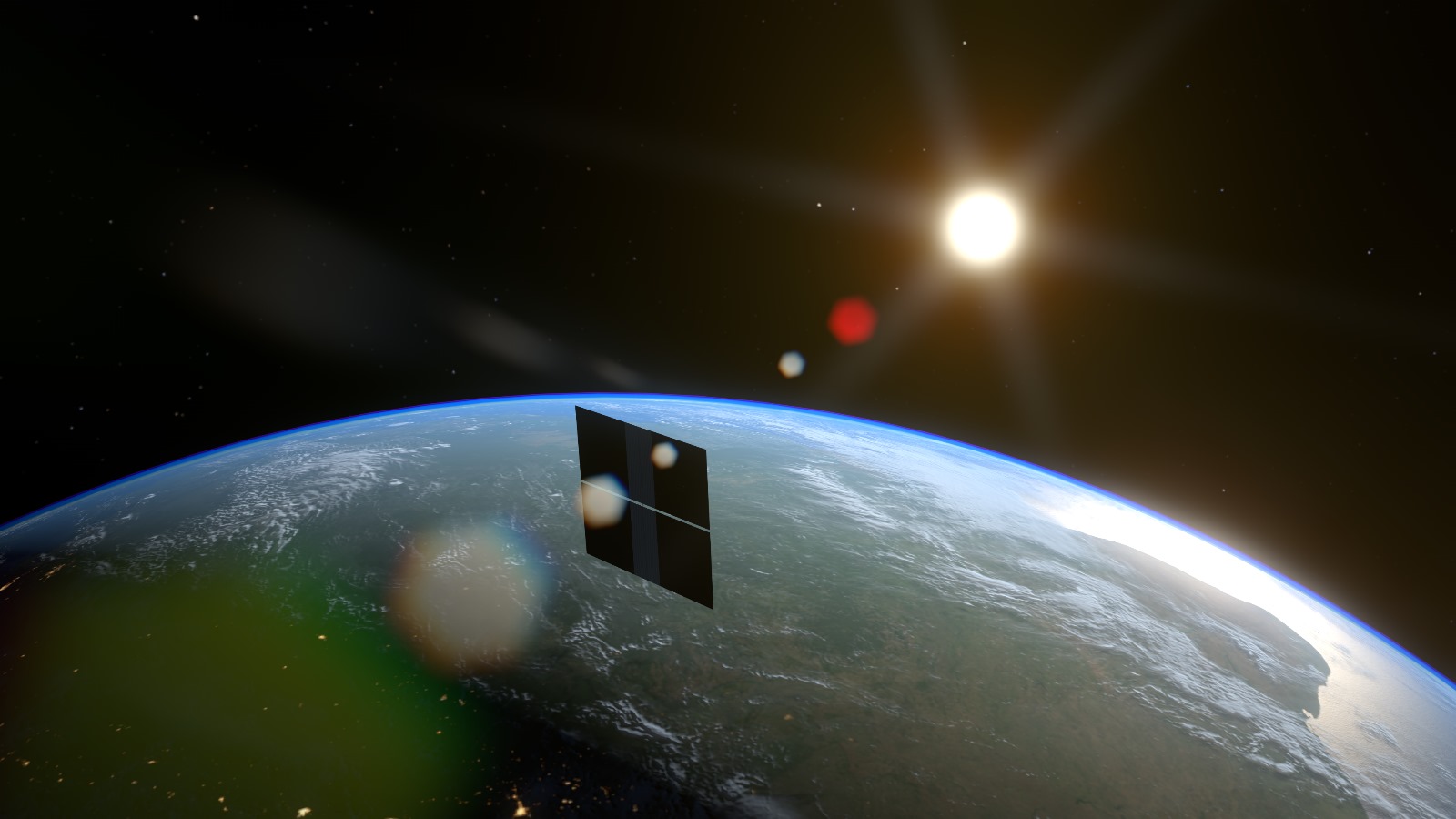
Google Project Suncatcher satellite constellation concept
Google's vision for orbital TPU clusters (Source: Google Research)

Project Suncatcher Timeline

Starcloud: First AI Model Trained in Space

While Google and SpaceX plan for the future, Starcloud has already done it. The Redmond, Washington startup launched Starcloud-1 on November 2, 2025, aboard a SpaceX Falcon 9, carrying a single NVIDIA H100 GPU into low Earth orbit. This was the first data-center-class chip ever to operate in space.

The 12-person team, which includes ex-SpaceX Starlink engineer Adi Oltean, has since demonstrated what most thought impossible. They trained NanoGPT (developed by OpenAI co-founder Andrej Karpathy) on Shakespeare's complete works, producing eerily Elizabethan outputs. More impressively, they deployed Google's Gemma LLM and received its first orbital transmission.

First Words from Orbit

"Greetings, Earthlings! I'm Gemma, and I'm here to observe, analyze, and perhaps, occasionally offer a slightly unsettlingly insightful commentary."

The first response from Google's Gemma LLM running on Starcloud-1 in orbit

Starcloud-1 satellite orbiting Earth at the terminator line
Starcloud-1 in orbit (Source: NVIDIA)

The Economics: Power Costs Compared

CEO Philip Johnston, a Harvard MPA and Wharton MBA who previously worked on satellite projects at McKinsey, is bullish: "In 10 years, nearly all new data centers will be built in outer space."

His economics? Power costs of $0.002/kWh in space versus $0.05 to $0.17/kWh on Earth. That's a potential 10x to 85x reduction.

Starcloud's roadmap accelerates quickly. Starcloud-2, planned for October 2026, will carry multiple H100s plus NVIDIA's newer Blackwell B200 chips, delivering 100x the power of the current satellite. The ultimate vision: a 5-gigawatt orbital data center with a 4km by 4km solar array, roughly the size of Manhattan's Central Park, floating in space.

A Global Race with Serious Challengers

This isn't just an American competition. China launched its "Three-Body Computing Constellation" in May 2025 (a nod to Liu Cixin's science fiction trilogy), with 12 satellites from Zhejiang Lab and ADA Space. The plan calls for 2,800 satellites with combined processing power of 1,000 petaflops, connected by 100 Gbps laser links.

The European Union's ASCEND project, led by Thales Alenia Space under a Horizon Europe grant, published positive feasibility results in June 2024. Their roadmap targets a 50kW proof of concept by 2031 and 1 gigawatt deployment by 2050. It's more conservative than American timelines but comes with significant government backing focused on European digital sovereignty.

Global Space Computing Initiatives

Other players are emerging rapidly:

  • Aetherflux (co-founded by Robinhood's Baiju Bhatt) is building "Galactic Brain," targeting Q1 2027 for its first node
  • Sophia Space (Seattle) raised $3.5M to develop orbital edge computing platforms
  • Lonestar Data Holdings signed a $120M deal to launch lunar data storage by 2027
  • Axiom Space is entering the orbital data center market from its commercial space station base

The Investment Landscape

For investors, this emerging sector presents both opportunity and extreme risk. The total addressable market is compelling: global data center spending is projected to reach $517 to $691 billion by 2030, while AI electricity consumption grows 50% annually. If space can capture even 5 to 10% of new capacity, that represents tens of billions in potential revenue.

Funding Comparison

Company Total Raised Key Investors Stage
Starcloud $27M NFX, Y Combinator, In-Q-Tel, A16Z scout Seed (operational satellite)
Sophia Space $3.5M Unlock Ventures Pre-seed
ADA Space (China) $77M+ Chinese VCs Series B
Lonestar $120M deal Sidus Space Commercial partnership

Starcloud's $27 million seed round, one of the largest ever for a Y Combinator company, attracted NFX, In-Q-Tel (the CIA's venture arm), and scout funds from Andreessen Horowitz and Sequoia. NVIDIA's Inception Program provides discounted chips and technical support.

Challenges and Risks

The economics remain uncertain. Google estimates that space data centers need launch costs below $200/kg to achieve cost parity. That's a 7 to 8x reduction from today's $1,500 to $2,900/kg. SpaceX's Starship could theoretically achieve this, but hasn't yet demonstrated operational reliability.

Launch Cost Trajectory to Viability

Critical analysts note substantial hurdles:

  • Radiation: Consumer-grade chips need hardening at scale
  • Thermal management: Massive radiators required (1 to 3 m² per kilowatt)
  • Satellite handoffs: Computation must continue during orbital transitions
  • Upfront costs: Could exceed $50 to $100 million per megawatt initially

Environmental Concerns

A Saarland University study calculated that when accounting for rocket launches and atmospheric reentry, orbital data centers could produce an order of magnitude greater emissions than terrestrial alternatives. This challenges the environmental narrative and remains an open question for the industry.

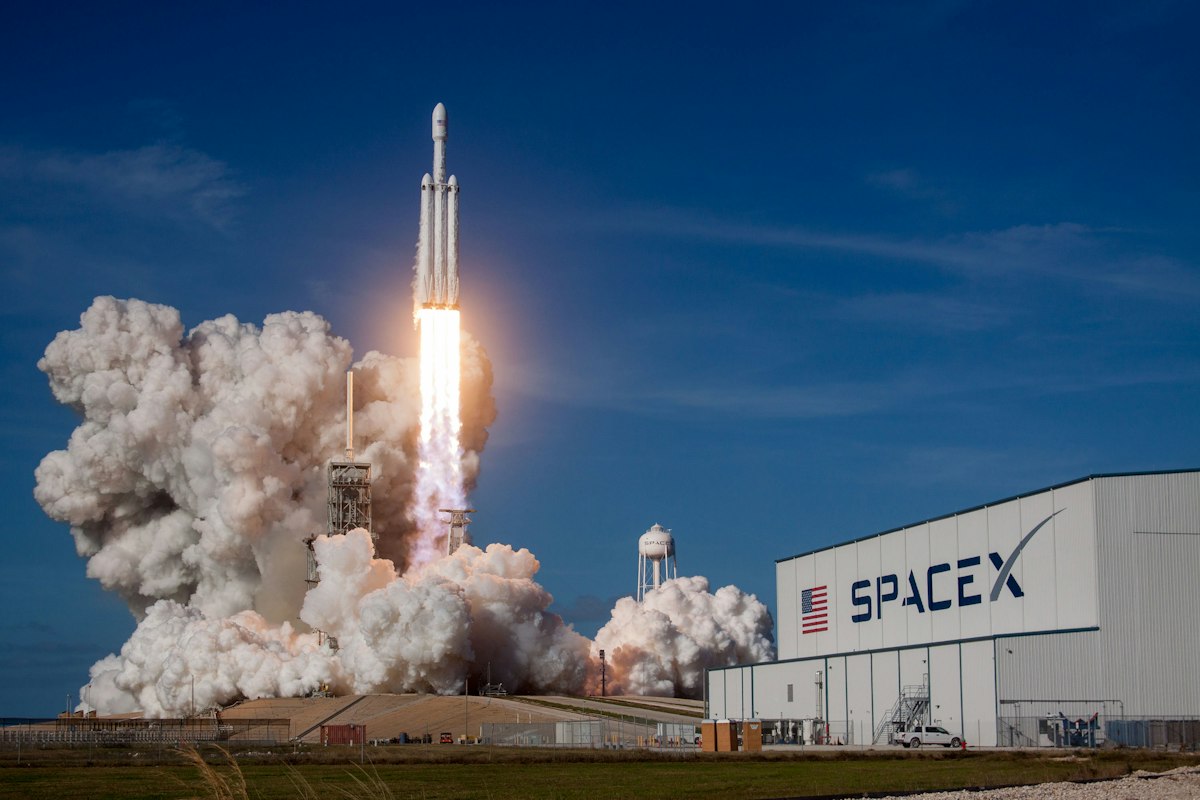
SpaceX Falcon Heavy rocket launch
Reducing launch costs is critical for space data center viability

What This Means for the Future of AI

The race to space-based computing represents a fundamental shift in how we think about infrastructure constraints on AI. For the past decade, progress in AI has been gated by three factors: algorithms, data, and compute. Space potentially removes the ceiling on the third.

If Starcloud's economics prove out, and if Starship achieves the launch frequency that Google and SpaceX are banking on, we could see AI training runs of unprecedented scale. Models with trillions of parameters trained on distributed orbital networks, with no grid capacity or permitting constraints. The implications for AI development, and for the companies that control this infrastructure, are enormous.

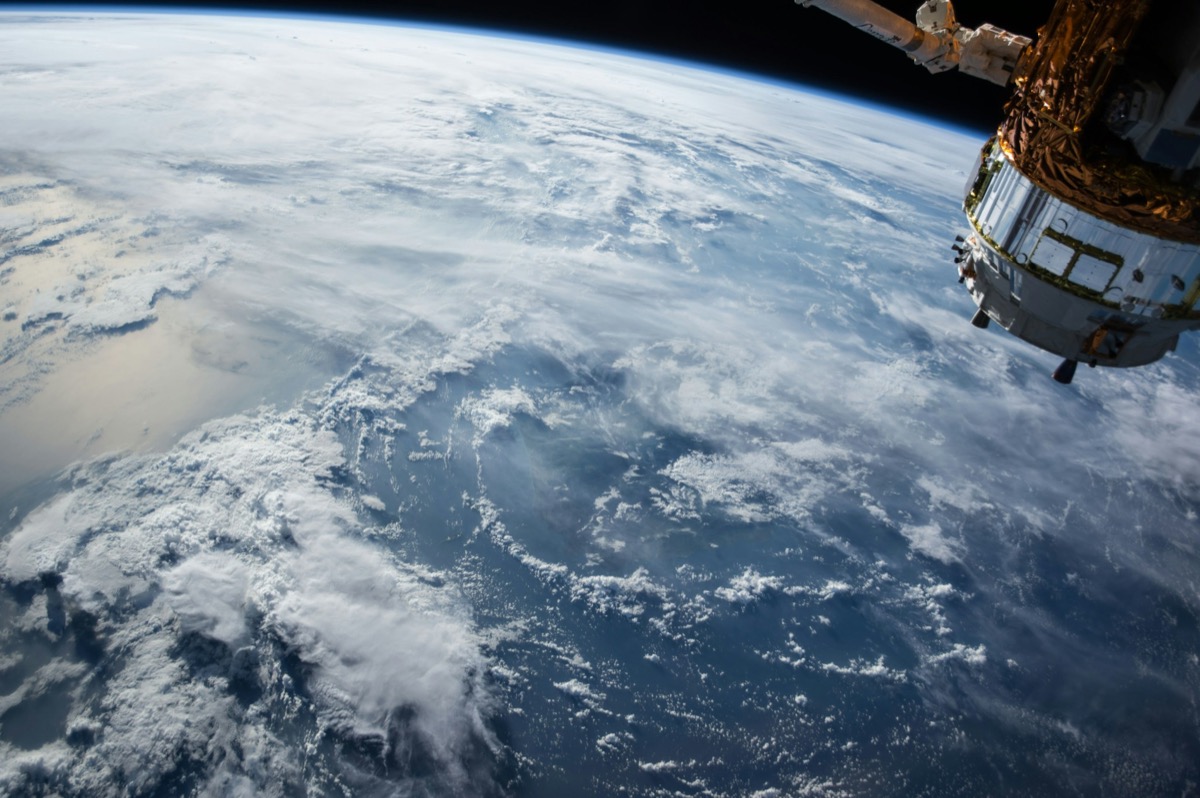
Earth viewed from space showing city lights
The future of AI infrastructure may extend beyond Earth

Key Milestones to Watch

Late 2026
SpaceX begins Starlink V3 deployments via Starship
October 2026
Starcloud-2 launches with 100x more power
Early 2027
Google launches Suncatcher prototype satellites
Q1 2027
Aetherflux's Galactic Brain first node goes online
2027
Lonestar launches lunar data storage

But the risks are equally substantial. This is genuinely hard engineering. Thermal management in vacuum, radiation shielding for consumer-grade chips, autonomous satellite formation flying, and optical communication through Earth's atmosphere. Many of these problems have been studied for decades without clean solutions. Google explicitly describes Suncatcher as a moonshot with "no guaranteed returns."

For tech enthusiasts, business strategists, and investors alike, the key insight is temporal: what seemed like fantasy 18 months ago is now being actively prototyped. Starcloud has a GPU running in orbit today. Google is building satellites for 2027. SpaceX is planning mass production for late 2026. The question is no longer whether AI will leave Earth, but how fast, and who will lead the way.

The next 24 months will tell us whether this is the beginning of a genuine infrastructure revolution, or an expensive lesson in the gap between vision and physics. Either way, the race is on.

Sources & Further Reading

  • CNBC: "Nvidia-backed Starcloud trains first AI model in space"
  • Google Research: "Exploring a space-based, scalable AI infrastructure system design"
  • Data Center Dynamics: "Project Suncatcher: Google to launch TPUs into orbit"
  • Scientific American: "Space-Based Data Centers Could Power AI with Solar Energy"
  • IEA: "Energy demand from AI" (Energy and AI Analysis)
  • Singularity Hub: "Data Centers in Space: Will 2027 Really Be the Year AI Goes to Orbit?"
  • Space.com: "Data centers in space: Will 2027 really be the year AI goes to orbit?"