1M
NVDA$207.14+3.2%
MSFT$486.19+4.6%
GOOGL$375.19+5.4%
AAPL$303.05-1.9%
AMZN$285.86+5.3%
META$593.44+6.6%
TSLA$323.64+4.0%
IBM$226.69+1.4%
CRM$188.81+2.6%
AMD$480.57+0.9%
AVGO$388.72-0.1%
ARM$236.96-1.1%
TSM$403.29-0.2%
INTC$90.31+0.1%
QCOM$149.23+1.1%
MU$815.37-0.9%
CSCO$115.21-0.7%
ANET$181.33+0.5%
SMCI$28.45+0.2%
ORCL$137.58+5.9%
PLTR$125.14+1.7%
DELL$417.14+2.9%
HPE$49.03+2.4%
PSTG$77.17+2.8%
ALAB$317.11+1.9%
AMAT$511.65+0.8%
LRCX$290.96-0.7%
KLAC$179.81-1.6%
ASML$1,635.04+0.4%
TER$362.31-1.5%
GEV$997.86+0.8%
CEG$272.41+3.7%
UEC$9.82+2.3%
OKLO$41.30+6.4%
SMR$8.92+5.9%
BWXT$172.80+2.4%
VST$153.96+3.9%
D$68.80-0.5%
SO$94.22-0.3%
NEE$86.33-0.7%
CCJ$89.54+3.7%
LEU$183.35+3.6%
BE$217.12+5.5%
KMI$31.66-1.6%
EXC$45.68-0.3%
VRT$258.15+6.9%
ETN$432.93+4.3%
CAT$823.61+1.1%
PWR$674.29+1.0%
EME$814.20+2.1%
URI$1,103.76+2.3%
VMC$278.76+3.8%
J$138.17+2.4%
TT$461.02+1.3%
CARR$62.65+1.4%
JCI$146.68+0.0%
SIEGY$162.90-0.1%
ALB$119.04+1.2%
SQM$66.71-0.5%
LAC$2.97+3.5%
MP$43.73+5.7%
FCX$63.24+1.0%
GLW$145.80+5.5%
SCCO$185.35+1.4%
AA$44.55-1.6%
RIO$95.41-1.5%
VALE$14.57-3.3%
LYSDY$9.80-1.4%
EQIX$1,024.62+0.5%
DLR$191.93+1.8%
AMT$174.17+0.5%
LITE$761.92+6.7%
COHR$287.52+9.4%
CIEN$383.36+1.7%
IRM$124.97+2.2%
CCI$78.36+2.7%
MDB$357.81+6.0%
ADBE$253.37+1.2%
RIVN$15.58+2.4%
DDOG$275.55+2.8%
SNOW$312.84+6.7%
NOW$114.95+3.3%
PATH$13.02+2.0%
CRWD$197.10+3.3%
NVDA$207.14+3.2%
MSFT$486.19+4.6%
GOOGL$375.19+5.4%
AAPL$303.05-1.9%
AMZN$285.86+5.3%
META$593.44+6.6%
TSLA$323.64+4.0%
IBM$226.69+1.4%
CRM$188.81+2.6%
AMD$480.57+0.9%
AVGO$388.72-0.1%
ARM$236.96-1.1%
TSM$403.29-0.2%
INTC$90.31+0.1%
QCOM$149.23+1.1%
MU$815.37-0.9%
CSCO$115.21-0.7%
ANET$181.33+0.5%
SMCI$28.45+0.2%
ORCL$137.58+5.9%
PLTR$125.14+1.7%
DELL$417.14+2.9%
HPE$49.03+2.4%
PSTG$77.17+2.8%
ALAB$317.11+1.9%
AMAT$511.65+0.8%
LRCX$290.96-0.7%
KLAC$179.81-1.6%
ASML$1,635.04+0.4%
TER$362.31-1.5%
GEV$997.86+0.8%
CEG$272.41+3.7%
UEC$9.82+2.3%
OKLO$41.30+6.4%
SMR$8.92+5.9%
BWXT$172.80+2.4%
VST$153.96+3.9%
D$68.80-0.5%
SO$94.22-0.3%
NEE$86.33-0.7%
CCJ$89.54+3.7%
LEU$183.35+3.6%
BE$217.12+5.5%
KMI$31.66-1.6%
EXC$45.68-0.3%
VRT$258.15+6.9%
ETN$432.93+4.3%
CAT$823.61+1.1%
PWR$674.29+1.0%
EME$814.20+2.1%
URI$1,103.76+2.3%
VMC$278.76+3.8%
J$138.17+2.4%
TT$461.02+1.3%
CARR$62.65+1.4%
JCI$146.68+0.0%
SIEGY$162.90-0.1%
ALB$119.04+1.2%
SQM$66.71-0.5%
LAC$2.97+3.5%
MP$43.73+5.7%
FCX$63.24+1.0%
GLW$145.80+5.5%
SCCO$185.35+1.4%
AA$44.55-1.6%
RIO$95.41-1.5%
VALE$14.57-3.3%
LYSDY$9.80-1.4%
EQIX$1,024.62+0.5%
DLR$191.93+1.8%
AMT$174.17+0.5%
LITE$761.92+6.7%
COHR$287.52+9.4%
CIEN$383.36+1.7%
IRM$124.97+2.2%
CCI$78.36+2.7%
MDB$357.81+6.0%
ADBE$253.37+1.2%
RIVN$15.58+2.4%
DDOG$275.55+2.8%
SNOW$312.84+6.7%
NOW$114.95+3.3%
PATH$13.02+2.0%
CRWD$197.10+3.3%
NVDA$207.14+3.2%
MSFT$486.19+4.6%
GOOGL$375.19+5.4%
AAPL$303.05-1.9%
AMZN$285.86+5.3%
META$593.44+6.6%
TSLA$323.64+4.0%
IBM$226.69+1.4%
CRM$188.81+2.6%
AMD$480.57+0.9%
AVGO$388.72-0.1%
ARM$236.96-1.1%
TSM$403.29-0.2%
INTC$90.31+0.1%
QCOM$149.23+1.1%
MU$815.37-0.9%
CSCO$115.21-0.7%
ANET$181.33+0.5%
SMCI$28.45+0.2%
ORCL$137.58+5.9%
PLTR$125.14+1.7%
DELL$417.14+2.9%
HPE$49.03+2.4%
PSTG$77.17+2.8%
ALAB$317.11+1.9%
AMAT$511.65+0.8%
LRCX$290.96-0.7%
KLAC$179.81-1.6%
ASML$1,635.04+0.4%
TER$362.31-1.5%
GEV$997.86+0.8%
CEG$272.41+3.7%
UEC$9.82+2.3%
OKLO$41.30+6.4%
SMR$8.92+5.9%
BWXT$172.80+2.4%
VST$153.96+3.9%
D$68.80-0.5%
SO$94.22-0.3%
NEE$86.33-0.7%
CCJ$89.54+3.7%
LEU$183.35+3.6%
BE$217.12+5.5%
KMI$31.66-1.6%
EXC$45.68-0.3%
VRT$258.15+6.9%
ETN$432.93+4.3%
CAT$823.61+1.1%
PWR$674.29+1.0%
EME$814.20+2.1%
URI$1,103.76+2.3%
VMC$278.76+3.8%
J$138.17+2.4%
TT$461.02+1.3%
CARR$62.65+1.4%
JCI$146.68+0.0%
SIEGY$162.90-0.1%
ALB$119.04+1.2%
SQM$66.71-0.5%
LAC$2.97+3.5%
MP$43.73+5.7%
FCX$63.24+1.0%
GLW$145.80+5.5%
SCCO$185.35+1.4%
AA$44.55-1.6%
RIO$95.41-1.5%
VALE$14.57-3.3%
LYSDY$9.80-1.4%
EQIX$1,024.62+0.5%
DLR$191.93+1.8%
AMT$174.17+0.5%
LITE$761.92+6.7%
COHR$287.52+9.4%
CIEN$383.36+1.7%
IRM$124.97+2.2%
CCI$78.36+2.7%
MDB$357.81+6.0%
ADBE$253.37+1.2%
RIVN$15.58+2.4%
DDOG$275.55+2.8%
SNOW$312.84+6.7%
NOW$114.95+3.3%
PATH$13.02+2.0%
CRWD$197.10+3.3%
AGI AI Progress 2026 Outlook

The Road to AGI: What 2026 Reveals About Our Progress

Artificial general intelligence is no longer theoretical. Prediction markets, expert forecasts, and $500 billion in infrastructure investments all point to a transformative few years ahead.

January 15, 2026 | 15 min read
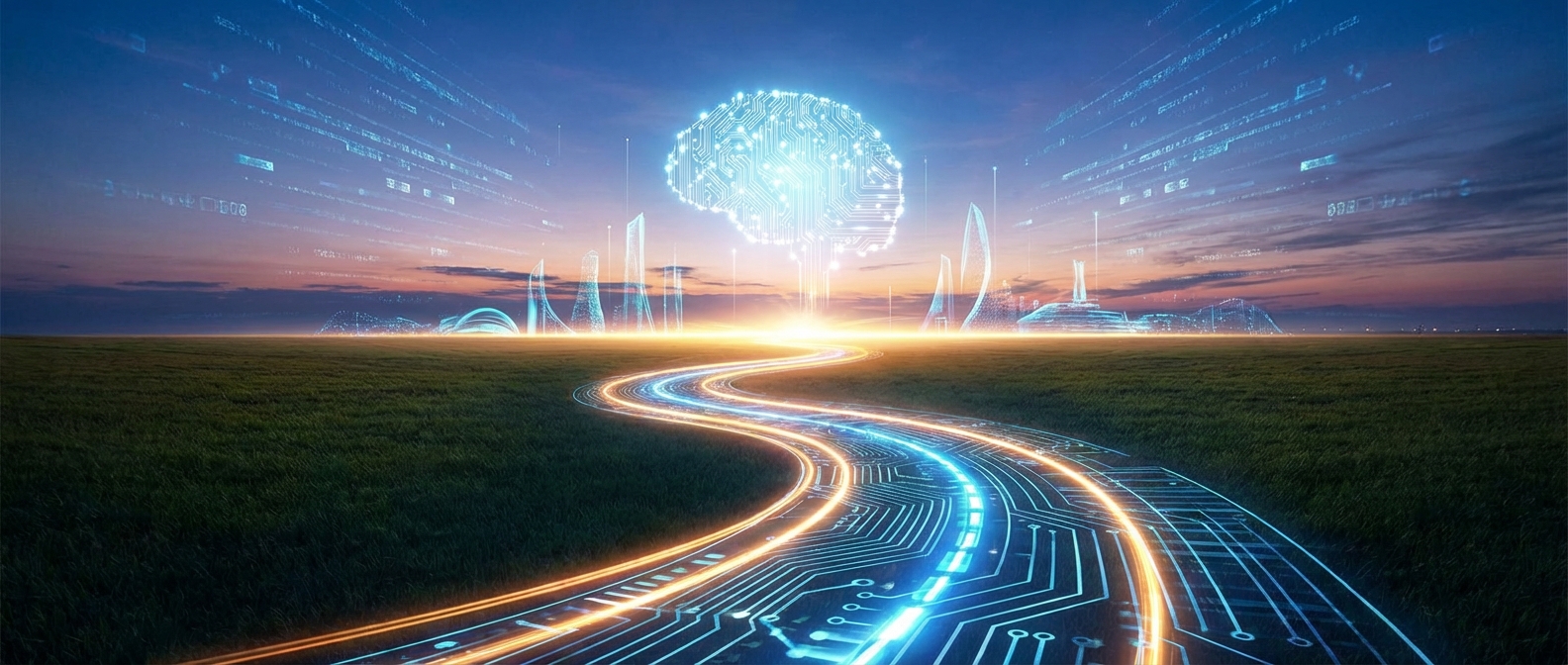
A glowing digital path leading to an illuminated brain, representing the road to artificial general intelligence
$500B
in AI infrastructure being deployed as labs race toward transformative capabilities
Stargate: $500B over 4 years
Hyperscaler CapEx: $386B in 2026
Expert timeline predictions range from late 2026 to beyond 2030

The question has shifted. For decades, researchers debated whether machines could ever achieve general intelligence. Now, at the start of 2026, the conversation has moved to when and how we will recognize it when it arrives.

Leading AI labs and prediction markets offer a wide range of estimates, from late 2026 to beyond 2030. There is no consensus. Anthropic has told the U.S. government to expect "powerful AI systems" in late 2026 or early 2027. Sam Altman declared in December that OpenAI is "now confident we know how to build AGI." Others, like Demis Hassabis, place the timeline closer to 2030.

What makes this moment different is the convergence of evidence: technical breakthroughs in reasoning, unprecedented infrastructure investments, and AI systems that are moving from generating content to executing real-world tasks.

This article maps the current state of the race toward AGI: what is actually happening, what the evidence suggests about timelines, and what constraints will shape how quickly these systems develop. Whether you are an investor, a professional thinking about career implications, or simply someone who wants to understand the technology reshaping our world, the data in this report will help you form your own view of what lies ahead.
Infrastructure

$500B

Stargate Project investment over 4 years

Investment

$202B

AI investment in 2025 (50% of all VC funding)

Adoption

79%

Organizations now using AI agents

CES 2026 Marked AI's Transition from Digital to Physical

The January 2026 Consumer Electronics Show represented what many observers called "the most significant shift in AI from digital interfaces to the physical world." The dominant theme was Physical AI: robots that move, systems that act, and infrastructure that powers it all.

NVIDIA CEO Jensen Huang introduced the Vera Rubin platform, a six-chip AI system claiming 10x reduction in inference costs and 4x fewer GPUs needed for training. But hardware specs were secondary to the exhibition floor, where humanoid robots ready for actual deployment outnumbered prototypes for the first time.

Key Robotics Announcements at CES 2026

Robot Capability Deployment
Boston Dynamics Atlas 56 degrees of freedom, 110-lb lifting capacity Hyundai Metaplant, Georgia (2026)
EngineAI T800 1.73m tall, 450 Nm peak torque Shipping mid-2026 at $25,000
AgiBot General-purpose humanoid 5,000+ units shipped globally
LG CLOiD Household tasks (laundry, dishwasher) "Zero Labor Home" vision
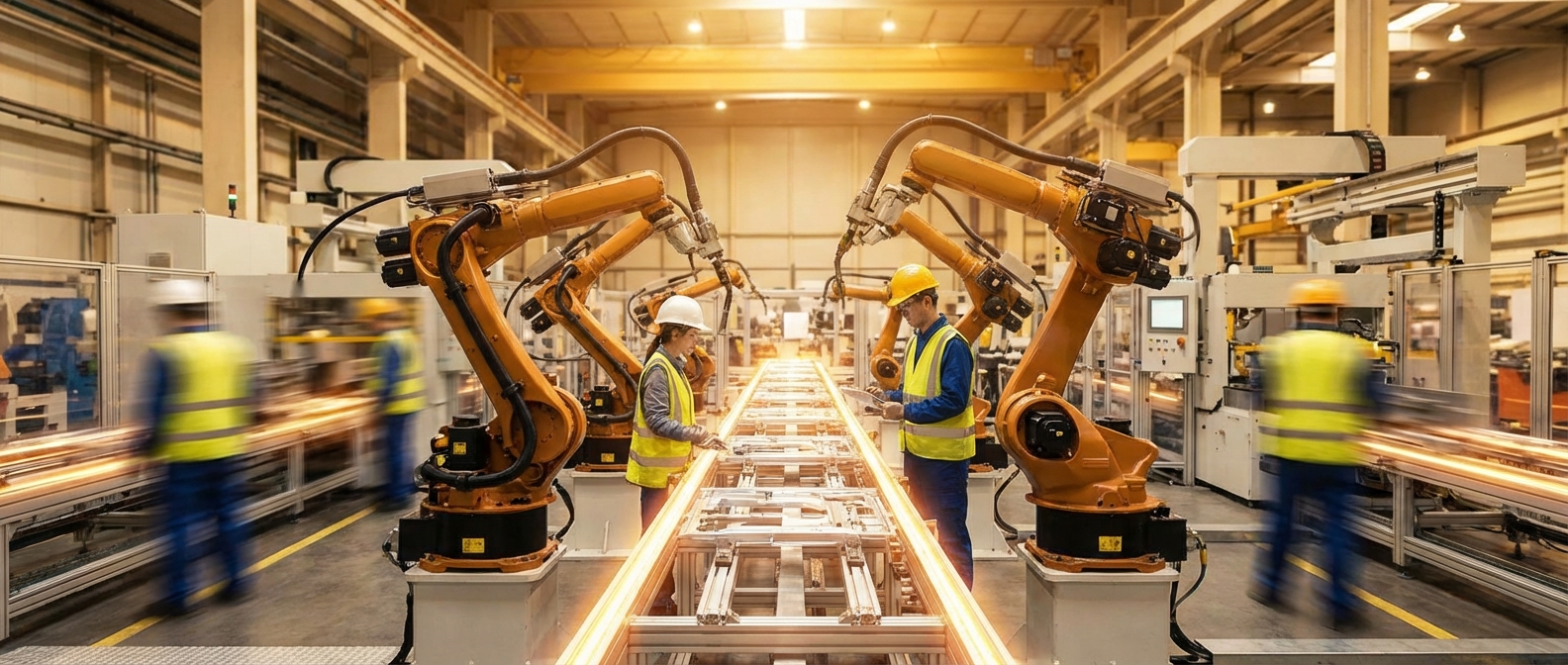
Industrial robotic arms working alongside human workers on a factory floor, representing the physical AI revolution
Industrial robotics integration: AI-powered robotic arms now work alongside human operators in manufacturing facilities worldwide

Google DeepMind announced integration of its Gemini Robotics AI into Boston Dynamics' Atlas, representing a significant convergence of frontier AI with advanced robotics. The terminology emerging from CES captured the industry's new direction: Large Action Models (LAMs) that "book flights, negotiate refunds, and manage smart homes without human intervention."

NVIDIA CES 2026 Keynote: Jensen Huang introduces the Vera Rubin platform and Physical AI vision

"Users no longer want a poem about groceries; they want the groceries delivered." Observed at CES 2026

Reasoning Models Represent a Genuine Paradigm Shift

The most significant technical development of 2025-2026 has been the rise of reasoning models: AI systems that allocate variable amounts of computation to "think" before responding. Rather than simply scaling model size, labs discovered they could dramatically improve performance by giving models more time to reason at inference. This technique is called test-time compute.

Think of it like this: previous AI models answered immediately, like a student blurting out the first thing that came to mind. Reasoning models pause, consider multiple approaches, and work through problems step by step, like a student showing their work on an exam.

Why this matters: Reasoning models are closing the gap between AI and human-level problem solving for complex tasks. They can now tackle graduate-level science questions, competition-level mathematics, and production-quality software engineering. The practical implication is that AI is becoming useful for work that previously required significant human expertise.

Reasoning Model Benchmark Performance

Source: Company announcements and benchmark reports. GPQA Diamond measures graduate-level science; SWE-bench measures real-world programming; AIME measures math competition performance.

How the Major Reasoning Models Compare

Model Approach Key Achievement Cost (per 1M input tokens)
OpenAI o3 Reinforcement learning for internal reasoning tokens 88% on ARC-AGI benchmark (GPT-4o scored 5%) $15.00
Anthropic Claude 3.7 Extended Thinking (visible reasoning, up to 128K tokens) 96.2% on MATH 500 benchmark $3.00
Google Gemini 3 Deep Think Multi-agent reasoning (parallel hypothesis exploration) State-of-the-art on Humanity's Last Exam Varies
DeepSeek R1 Pure RL without human-labeled examples o1-level performance at 15-50% of the cost $0.55

Perhaps the most disruptive release came from China: DeepSeek R1, subsequently published in Nature. DeepSeek proved that reasoning capabilities could emerge from pure reinforcement learning without human-labeled reasoning examples. Researchers observed an "aha moment" during training when the model spontaneously developed self-verification behaviors and began exploring alternative approaches when stuck.

The "Aha Moment"

During DeepSeek R1's training, researchers observed the model spontaneously developing self-verification behaviors and exploring alternative approaches when stuck, without explicit instruction to do so. This emergent behavior suggests reasoning may be a natural consequence of sufficient training, not something that needs to be explicitly programmed.

Source: DeepSeek R1 research paper (Nature, 2025)

Prediction Markets and Experts Converge on the Late 2020s

Metaculus, a community forecasting platform with over 1,700 forecasters on its AGI questions, places the median prediction for a "First General AI Announcement" at December 2027. The combined AGI Timelines Dashboard estimates 2031 with an 80% confidence interval spanning 2027-2045. Polymarket currently shows 9% odds that OpenAI announces AGI before 2027.

What does this mean? If these predictions prove accurate, we could see AI systems capable of performing most intellectual work within the next 2-5 years. This would represent one of the most significant technological shifts in human history, with implications for employment, education, scientific research, and economic productivity that are difficult to overstate.

AGI Timeline Predictions by Source

Source: Metaculus forecasts, Polymarket, public statements from AI lab executives. "Prediction" indicates central estimate or stated expectation.

Expert opinions cluster similarly, though with notable variation:

Anthropic

Dario Amodei, CEO

Predicted at Davos 2025 that systems "broadly better than all humans at almost all things" could emerge by 2026 or 2027.

DeepMind

Demis Hassabis, CEO

Stated "one or two more big breakthroughs" are needed. Asked about 2030: "just after".

OpenAI

Sam Altman, CEO

"We are now confident we know how to build AGI as we have traditionally understood it."

Anthropic

Daniela Amodei, President

AGI is "maybe not wrong, but just outdated" as a concept. "By some definitions, we've already surpassed that."

The Definition of AGI Is Fragmenting Into Levels

All major labs have moved away from binary AGI definitions toward gradient or level-based frameworks. The question is no longer "will we have AGI?" but rather "what level of general capability have we reached?"

OpenAI's Five-Level AGI Framework

Level Name Capability Status
1 Chatbots Conversational AI Achieved
2 Reasoners Human-level problem solving Current (claimed)
3 Agents Systems that can take actions Emerging
4 Innovators AI that aids in invention Not yet
5 Organizations AI that can do the work of an organization Not yet

Google DeepMind published a more granular framework distinguishing between performance levels (from "Emerging" at Level 1 to "Superhuman" at Level 5) and autonomy levels. Under this framework, current LLMs qualify as "Emerging AGI," Level 1 performance across general tasks.

Steve Wozniak's "Coffee Test" remains an influential benchmark for physical AGI: a robot must enter an average American home it has never seen before, find the kitchen, identify the coffee machine and ingredients, figure out how the buttons work, and successfully brew a cup of coffee. No robot has passed this test. Prediction markets show a 92% probability of a robot passing before 2040.

The ARC-AGI Benchmark

ARC-AGI-2 (March 2025) proved harder for AI while remaining equally easy for humans: the top Kaggle score reached only 27.6%, while 100% of tasks are solved by humans in two or fewer attempts. The Grand Prize requiring 85%+ accuracy remains unclaimed, indicating AGI-level performance on rigorous benchmarks has not been achieved despite dramatic progress.

Source: ARC Prize Foundation Kaggle Competition

The Data Wall Is Real but Not Insurmountable

High-quality training data is approaching exhaustion. Epoch AI research estimates the effective stock of human-generated public text at approximately 300 trillion tokens, with exhaustion projected between 2026 and 2032 (median estimate: 2028).

Ilya Sutskever, OpenAI co-founder who departed to start Safe Superintelligence, captured the shift: "The 2010s were the age of scaling, now we're back in the age of wonder and discovery. Everyone is looking for the next thing."

Synthetic Data

80%

Projected share of AI training data that will be synthetic by 2028 (Gartner)

Cost Savings

60-80%

Cost reduction from using high-quality synthetic data vs. real data acquisition

The industry response has been a pivot to synthetic data. High-quality synthetic data can achieve 90-95% of real-data performance while reducing acquisition costs dramatically. NVIDIA's CES presentations emphasized "Physical AI" trained in virtual environments using synthetic data through platforms like Cosmos and Isaac GR00T.

However, model collapse remains a genuine concern. A July 2024 Nature paper demonstrated that AI models trained on AI-generated content progressively degrade, often called the "photocopy of a photocopy" problem. Each generation reinforces patterns from previous generations while losing information diversity. NYU researchers found that preserving even 10% of original human data can significantly mitigate this degradation.

What this means for AI progress: The data wall is one of the most significant constraints on reaching AGI. If labs cannot find ways to train on synthetic data without quality degradation, the rapid improvement in AI capabilities we have seen over the past few years may slow down. The race to solve this problem is one of the most consequential in AI research today.

Energy Constraints Are Driving a New Infrastructure Race

AI's energy appetite is transforming the power grid landscape. Global data center electricity consumption was approximately 460 TWh in 2024 and is projected to more than double to 1,050 TWh by 2026. AI operations could consume over 40% of global data center power by 2026.

To put this in perspective: 1,050 TWh is roughly equivalent to the annual electricity consumption of Germany and France combined. This level of energy demand creates real constraints on how fast AI can scale, regardless of algorithmic progress.

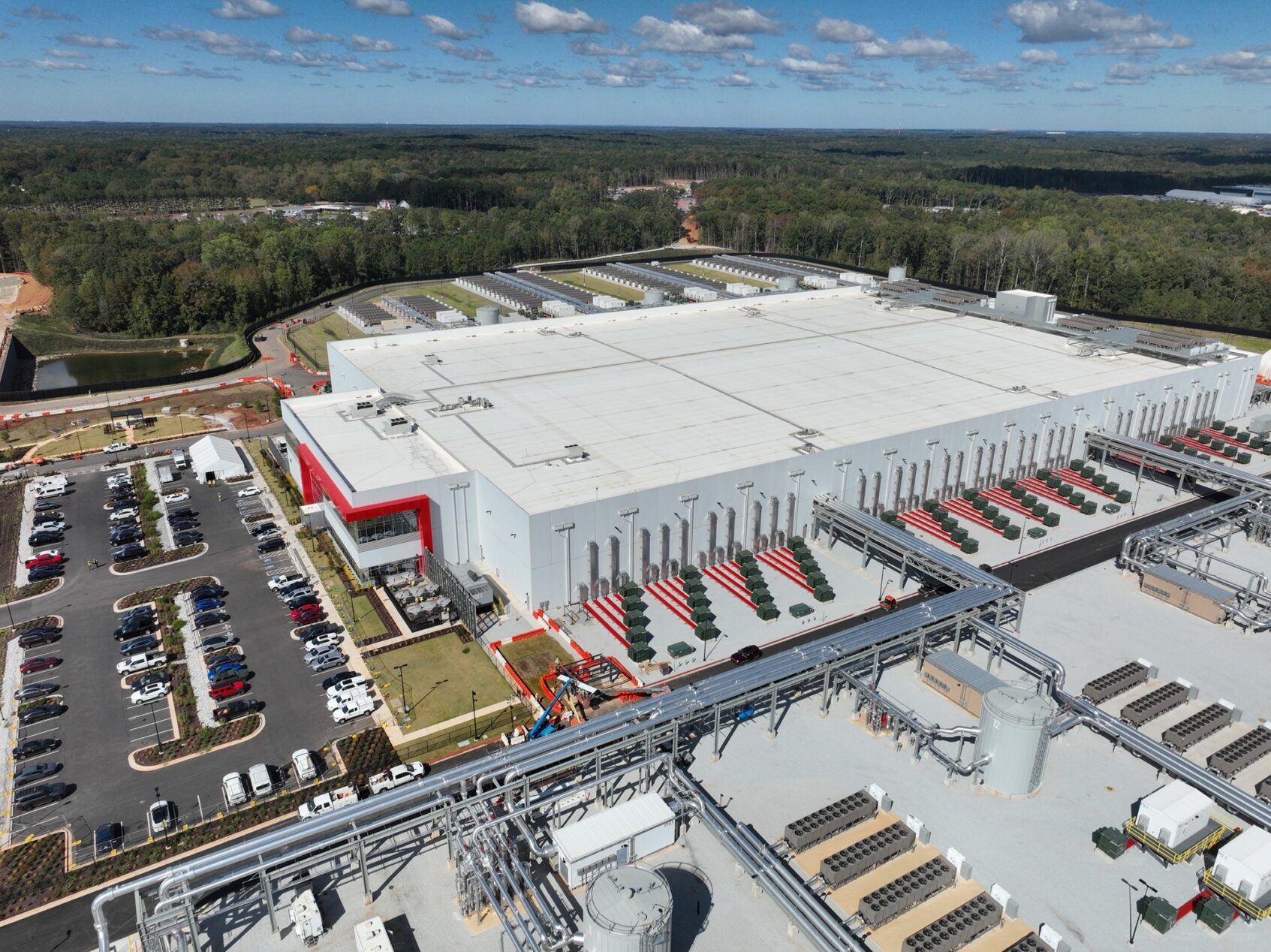
Aerial view of a modern AI data center facility showing the massive scale of infrastructure required for AI computing
Modern AI data centers require massive infrastructure investments, with facilities spanning hundreds of thousands of square feet

Global Data Center Energy Consumption

Source: IEA estimates and industry projections. 2026 figure is projected.

Major AI Infrastructure Investments

Project Investment Partners Status
OpenAI Stargate Project $500B over 4 years OpenAI, SoftBank, Oracle, MGX 8+ GW planned, Abilene TX operational
Microsoft Three Mile Island Restart 835 MW capacity Microsoft, Constellation Energy Announced 2025
Google Kairos Power SMRs Up to 500 MW by 2035 Google Agreement signed
Meta Nuclear Portfolio Up to 6.6 GW by 2035 TerraPower, Oklo, Vistra Multiple deals announced

The most speculative solutions involve space. Google's Project Suncatcher plans a prototype launch in early 2027, with a long-term goal of 1,000 satellites delivering 10 GW by 2032. An NVIDIA-backed startup called Starcloud launched its first H100 GPU satellite in November 2025. These approaches promise solar panels 8x more productive in orbit with no weather or night interruptions.

Agentic AI Has Arrived in the Enterprise

The shift from AI that generates to AI that executes is now visible in production deployments. According to PwC, 79% of organizations have adopted AI agents to some extent, and 57% already have agents running in production. Gartner predicts 40% of enterprise applications will feature task-specific AI agents by end of 2026, up from less than 5% in 2025.

AI Agent Adoption by Industry

Source: PwC AI adoption survey, Gartner enterprise technology analysis.

Customer Service

Klarna AI Assistant

Handled 2.3M conversations in first month. Two-thirds of all support chats.

11 min → 2 min

Resolution time

Developer Tools

Anthropic Claude Code

Full launch in May 2025. Run-rate revenue milestone.

$500M+

Revenue in 3 months

Productivity

GitHub Copilot

85% of developers now use AI coding tools regularly.

15-126%

Productivity gains

Enterprise

Equinix E-Bot

Internal employee support automation.

68%

Deflection rate

Agentic browsers represent the consumer-facing frontier. Perplexity's Comet, the Browser Company's Dia, and Microsoft's Copilot in Edge have "reframed the browser as an active participant rather than a passive interface." Travel platforms demonstrate end-to-end trip booking through conversation. Sabre's CES demo showed an agentic system that sets up traveler profiles, pulls loyalty details, and completes flight and hotel bookings in a single conversational flow.

The Investment Landscape Reflects Conviction in Near-Term AGI

AI captured approximately $202.3 billion in investment during 2025, roughly 50% of all global VC funding, up from 34% in 2024. The San Francisco Bay Area alone received $122 billion, accounting for 76% of US AI investment.

AI Investment Growth

Source: Crunchbase, PitchBook data. 2025 figure is preliminary estimate.

Anthropic's Funding Trajectory

March 2025

$61.5B

Series E valuation

September 2025

$183B

Series F valuation

December 2025

$350B

Reported term sheet

Revenue grew from $1B (early 2025) to $5B+ run rate by August, one of the fastest growth trajectories in tech history.

AI safety has emerged as a significant investment category. Safe Superintelligence Inc., founded in June 2024 by former OpenAI chief scientist Ilya Sutskever, raised $2 billion at a $32 billion valuation in April 2025 despite having no products. The company's sole mission is building "safe superintelligence."

The AI agent market specifically is projected to grow from $7.8 billion in 2025 to $52 billion by 2030, reaching $199 billion by 2034, a compound annual growth rate of 43.84%.

What the Hyperscalers Are Betting On

2026 Estimated AI Infrastructure CapEx

Source: Company guidance, analyst estimates. Figures represent total CapEx with significant AI allocation.

The combined spending represents roughly 36% year-over-year growth in AI infrastructure investment. Yet returns remain uncertain: AI services are expected to deliver only about $25 billion in revenue in 2025, roughly 10% of infrastructure spending. Only 25% of AI initiatives have delivered expected ROI to date.

What the Evidence Suggests About the Road Ahead

The trajectory toward AGI appears neither gradual nor binary. It is fragmenting into domain-specific competencies that may collectively constitute something we recognize as general intelligence. Current reasoning models solve International Math Olympiad problems and write production-quality code while still struggling to count letters in words or navigate unfamiliar kitchens.

Three constraints will shape the timeline:

1

Data Scarcity

Forcing innovation in synthetic data and alternative training approaches, with the "photocopy problem" creating genuine uncertainty about quality maintenance at scale.

2

Energy Infrastructure

Can be built but on timelines measured in years, not months. Nuclear and space-based solutions will not meaningfully contribute until the late 2020s.

3

Algorithmic Breakthroughs

Remain unpredictable. Demis Hassabis's assessment that "one or two more" Transformer-level discoveries are needed suggests both proximity and uncertainty.

The prediction market median of late 2027 for general AI announcements, combined with expert estimates clustering in the 2026-2030 range, suggests we are likely within a few years of systems that will be credibly called AGI by at least some major labs. The definition will continue to evolve. As Anthropic's Daniela Amodei observed, the very concept may already be "outdated," replaced by a more nuanced understanding of expanding capabilities across diverse domains.

What CES 2026 made viscerally clear is that this is no longer an abstract research question. Humanoid robots are shipping to factories. AI agents are handling millions of customer conversations. Investment measured in hundreds of billions of dollars is building the infrastructure for whatever comes next.

The road to AGI, it turns out, is the road we are already traveling.

Sources: CES 2026 keynotes, Metaculus forecasts, Polymarket, company announcements, analyst reports. Data accurate as of January 15, 2026.