AI Strategy
NVIDIA GTC 2026 and the Agentic AI Era
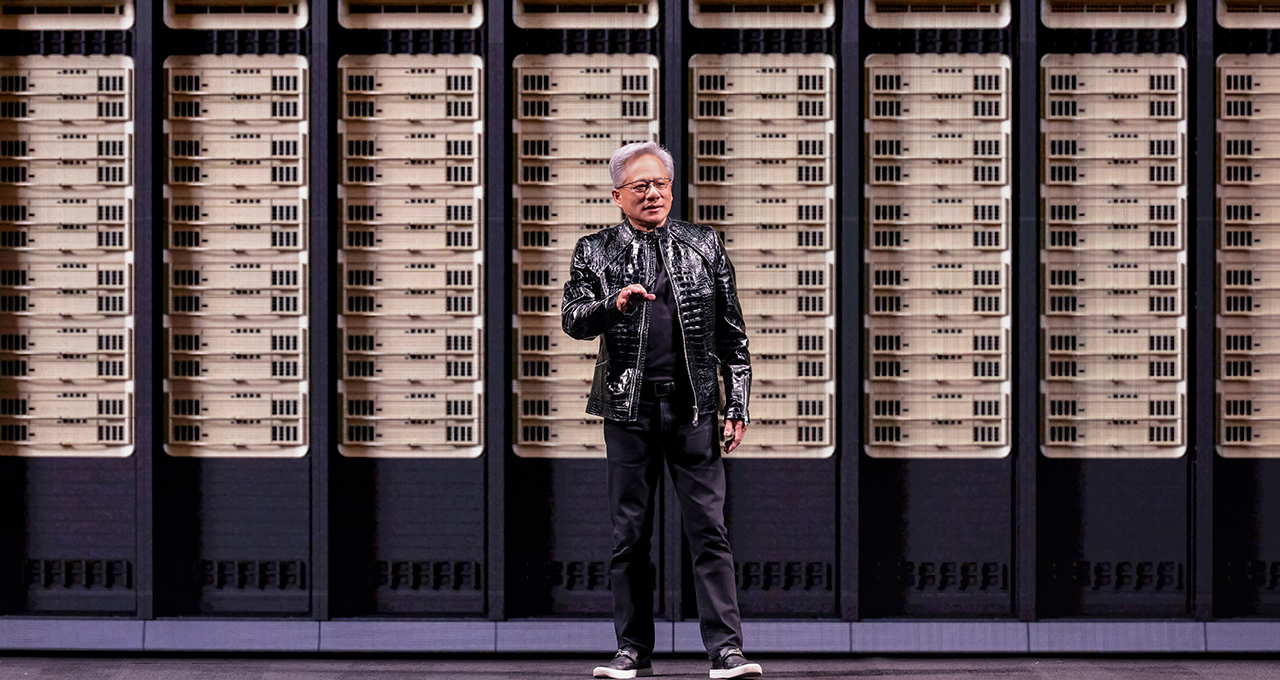
This is the most consequential GTC in years, and it has not started yet. NVIDIA enters the conference with a new hardware generation shipping in 2026, an open software stack for AI agents, and a financial trajectory that has reshaped the entire technology industry. The keynote on March 16 will fill in the details. The direction is already clear.
As of Friday, March 13, 2026, GTC has not opened. The conference runs March 16 through March 19, and Jensen Huang's keynote is scheduled for 11 a.m. Pacific on March 16. This piece draws on what NVIDIA has officially published, what financial results show, and what credible reporting says is coming.
Cost drop
10x
Per inference generation, Hopper to Blackwell to Vera Rubin
Market cap
$4.5T
As of mid-March 2026, per Stock Analysis
Q4 FY26 revenue
$68.1B
$62.3B from data center alone
Next horizon
2028
Feynman generation, silicon photonics, TSMC A16
Why Now
Why this conference matters
For the past three years, AI has been a content machine. You ask a question, the model answers. You request a draft, it writes one. That is generative AI, and it has already changed how millions of people work.
The next phase is different. Agentic AI means software that can plan and execute multi-step tasks on its own, not just answer one question at a time. Think of the difference between a calculator and a junior employee. A calculator gives you a number when you punch in a problem. A junior employee can take a goal, break it into steps, use different tools, check the results, and keep working until the job is done.
That shift matters enormously for infrastructure. A chatbot handles one exchange and goes quiet. An AI agent might spend hours or days running loops of work, calling tools, retrieving data, checking outputs, and feeding results back into the next step. Every one of those steps is inference: the AI performing its task. Running an AI model is like operating a factory. Training is building the factory. Inference is running it day after day for every customer request. The cheaper the factory runs, the more businesses can afford to use AI.
NVIDIA's message for GTC 2026 is that the agentic inflection point has arrived. The company wrote in March 2025 that AI was moving "from perception AI to generative AI and now agentic AI." A year later, Huang says the inflection point is here. GTC is where NVIDIA will show what the full stack for AI labor actually looks like.
What to watch on March 16
The open questions going into the keynote: how NVIDIA frames its agent software platform, whether NemoClaw becomes an official product, and how far the company extends its roadmap beyond Vera Rubin. The hardware story is already documented. The software integration story is what GTC 2026 needs to fill in.
The 30-second version
NVIDIA is no longer selling just faster chips. The company is building a full stack for AI workers: data center racks, memory systems, reasoning models, deployment tools, and networking. GTC 2026 is the moment that stack goes on display as a coherent product, not a collection of parts.
Sources: NVIDIA GTC 2026, NVIDIA's reasoning models post, NVIDIA's Blackwell inference post.
The Hardware
Vera Rubin: the new hardware
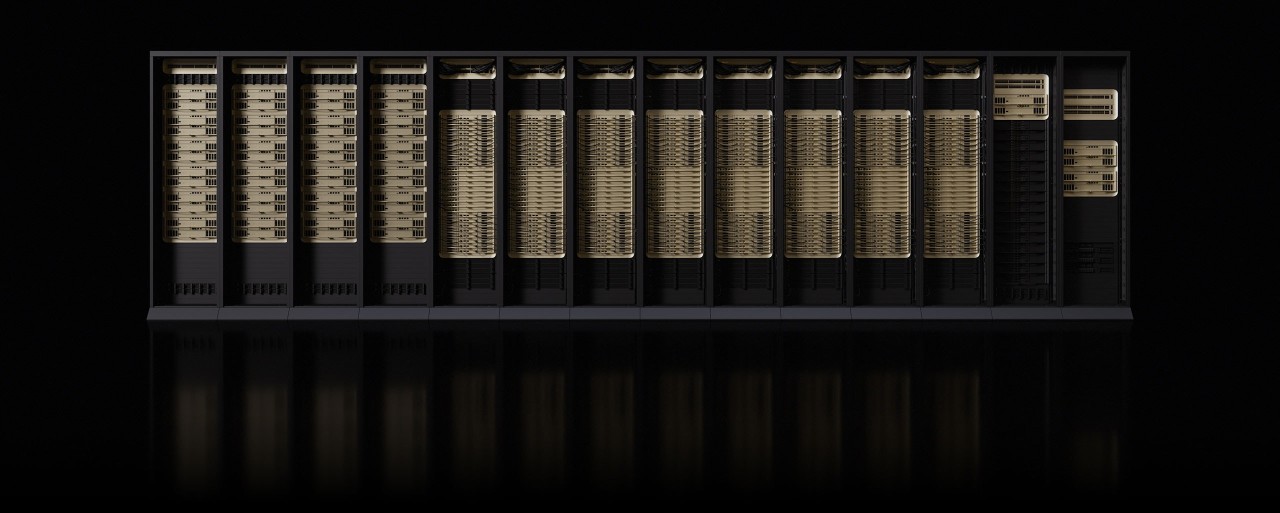
Vera Rubin is the generation that NVIDIA has built for the agent era. The Rubin NVL144 platform, which ships in the second half of 2026, combines 144 Rubin GPUs and 72 Vera CPUs into a single rack-scale system. The whole unit delivers up to 3.6 exaflops of FP4 inference. One exaflop equals one quintillion calculations per second. More exaflops means more AI work running simultaneously.
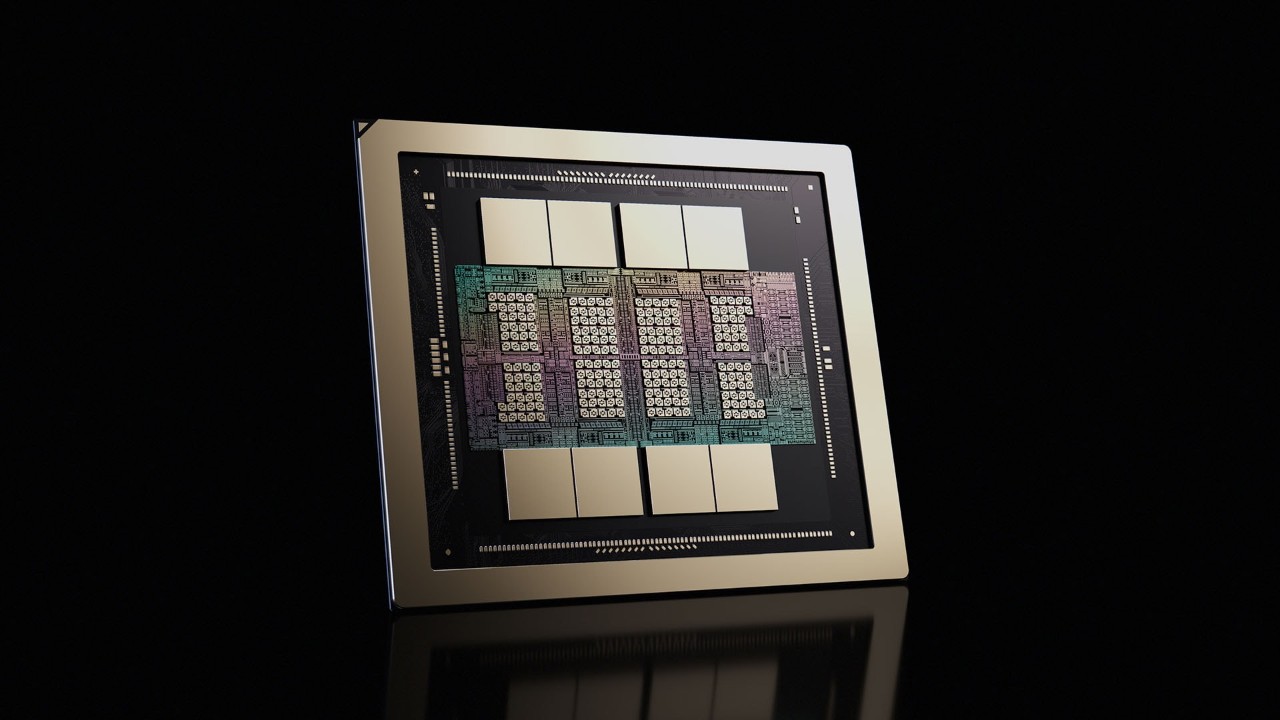
Each Rubin GPU reaches up to 50 petaflops of FP4 compute and carries 288 GB of HBM4 memory. HBM4 is high-bandwidth memory stacked directly on top of the processor, so data travels a shorter distance. Think of the difference between having your filing cabinet on your desk versus down the hall. The GPU spends less time waiting for data and more time computing.
FP4 is a number format that trades a small amount of precision for much faster processing. It is similar to using rounded numbers in mental math instead of calculating to ten decimal places. For inference tasks, that small precision trade-off rarely matters, and the speed gain is large.
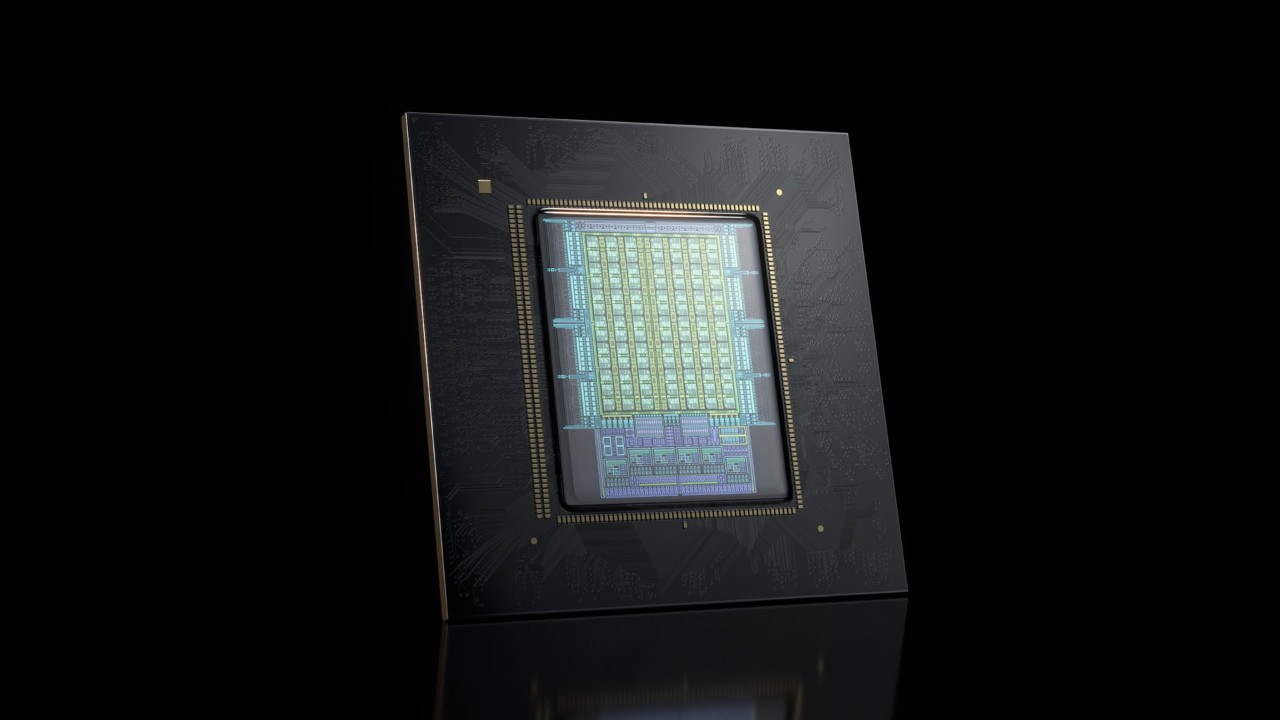
The new Vera CPU, which feeds the GPU complex with data and manages orchestration, delivers about 2.1 times more performance than the Grace CPU it replaces.
The clearest way to see Vera Rubin's significance is through the cost curve. NVIDIA says each generation delivers 10 times lower inference cost than the one before. That pattern has now held across three generations: Hopper, Blackwell, and Vera Rubin.
H100 / Hopper
100
Baseline cost index
Blackwell
10
10x cheaper than Hopper
Vera Rubin
1
10x cheaper than Blackwell
Relative inference cost index per generation, per NVIDIA's platform documentation
Why the cost curve changes the business case
Running an AI model is like operating a factory. Training is building the factory. Inference is running it day after day for every customer request. Agents turn inference into the dominant bill because they keep thinking, checking, and calling tools in loops. When inference gets 10 times cheaper, businesses that could only afford small pilots can now run continuous operations. That is the unlock GTC 2026 is built around.
| Spec | H100 / Hopper | Blackwell B200 | Vera Rubin |
|---|---|---|---|
| System | NVL8 | GB200 NVL72 | Rubin NVL144 |
| GPUs per system | 8 | 72 | 144 |
| Memory per GPU | 80 GB HBM3 | 192 GB HBM3e | 288 GB HBM4 |
| Single GPU FP4 compute | ~4 petaflops | ~9 petaflops | 50 petaflops |
| System FP4 inference | 3.6 exaflops | ||
| Host CPU | Standard x86 | Grace CPU | Vera CPU (2.1x Grace) |
| Relative inference cost | 100x | 10x | 1x (baseline) |
| Ships | 2023 | 2024 | H2 2026 |
Sources: NVIDIA Vera Rubin page, NVIDIA Vera CPU page, NVIDIA Blackwell Ultra economics post, NVIDIA Blackwell inference cost post.
The Roadmap
The road to 2028
NVIDIA's strategic advantage may be as much about cadence as it is about any single chip. The company now runs a rhythm that is easy to follow even for non-specialists: a named generation every one to two years, each one solving the bottleneck the previous one exposed.
Hopper defined the 2023 boom. Blackwell reset the cost curve in 2024. Vera Rubin arrives in 2026, built for reasoning and long-context agent work. After that comes Feynman, which industry reporting and NVIDIA's own materials point toward as a 2028 follow-up.
Feynman is still early. As of March 13, 2026, NVIDIA has not published a full specification. Reports from Barron's and Asian industry coverage point to TSMC's A16 process and more extensive use of silicon photonics. Silicon photonics means using light instead of electrical signals to move data between chips. Light travels faster than electrical current and generates less heat than copper wires. As systems get larger, moving data quickly between chips becomes the chokepoint, and optical links are the main engineering answer to that problem. These 2028 details should be read as credible direction, not confirmed product facts.
Chip roadmap
2023
Hopper (H100)
The platform that defined the first generative AI surge. The H100 became the default engine for ChatGPT-era training and inference. It proved AI spending was a sustained cycle, not a short-lived event.
2024
Blackwell (B200, GB200)
One-tenth the cost per token versus Hopper on key open models. The same kind of AI intelligence became dramatically cheaper to run at scale, opening the door to broader enterprise deployment.
H2 2026
Vera Rubin (NVL144)
3.6 exaflops of FP4 inference, 288 GB HBM4 per GPU, Vera CPU. Another 10x economics step. Built for continuous agent workloads that run in loops rather than answering one question and stopping.
2028 (expected)
Feynman
TSMC A16 process and silicon photonics reported by Barron's and industry sources. Light-based interconnects between chips instead of copper, addressing the data-movement bottleneck at very large scale. Specs unconfirmed as of March 2026.
Sources: NVIDIA Rubin system page, NVIDIA NVLink material, NVIDIA Blackwell Ultra post, Barron's roadmap coverage, NVIDIA silicon photonics switches.
The Software
The software side
The most speculative part of GTC 2026 is also the most consequential. Ahead of the conference, Wired and other outlets reported on an open-source agent deployment platform being called NemoClaw. The pitch is striking: a platform said to work across different hardware, not only NVIDIA systems.
NVIDIA's official stack already points in this direction. The company has released Llama Nemotron reasoning models under an open license, built the NeMo Agent Toolkit for developers assembling multi-step agents, created AI-Q to connect agents to enterprise data sources, and packaged models into deployable NIM microservices. Think of NIM as an app store for AI capabilities: pre-packaged models that businesses can plug in without building the infrastructure from scratch.
Put together, NVIDIA already has the reasoning models, the workflow layer, the enterprise connectors, and the delivery format. A broader agent deployment platform would tie those pieces into a single product that lets companies launch AI workers without rebuilding the stack from scratch.
The target customer is not hard to picture. Large enterprises want agents for customer support, research, coding, security operations, and supply-chain work. Smaller software teams want the same thing without needing a hyperscale data center. Hyperscalers, the largest cloud providers like Amazon AWS, Microsoft Azure, and Google Cloud, want bigger and more continuous workloads from their customers.
The real prize is not one chatbot. It is millions of AI workers doing specific jobs with enough reliability that businesses can trust them with daily operations.
Why open-source is the smart play for a chip company
An open agent platform sounds counterintuitive for a hardware leader. The logic is straightforward: if developers build their agent workflows on NVIDIA software, many of them will still choose NVIDIA hardware for the most demanding deployments. The open software layer becomes the top of the funnel. It also gives NVIDIA a seat at the table in enterprises that mix AMD accelerators, Google TPUs, or in-house chips into parts of their workflow.
Faster to launch
Teams can turn a reasoning model into a usable agent system with fewer infrastructure decisions. The plumbing is already there.
Safer to integrate
Companies need guardrails, audit trails, and access controls. NVIDIA's software stack is built around those enterprise requirements.
Bigger workloads
Once agents are easier to deploy, cloud demand rises because customers stop running occasional experiments and start running real workflows around the clock.
Sources: NVIDIA reasoning models post, NVIDIA NeMo Agent Toolkit, NVIDIA AI-Q toolkit, Wired pre-GTC NemoClaw report.
The Financials
The financial picture
The cleanest way to understand NVIDIA's position is the last six reported quarters. Total revenue rose from $35.1 billion in fiscal Q3 2025 to $68.1 billion in fiscal Q4 2026. Data center revenue did the heavy lifting, climbing from $30.8 billion to $62.3 billion over the same stretch.
A note on the numbers: Q1, Q2, and Q3 FY26 look lower than Q4 FY25 because NVIDIA's fiscal year runs February to January. Q1 FY26 started in February 2025, and the Blackwell ramp was still in early stages. By Q4 FY26, Blackwell shipments were at full scale and the revenue jump is visible.
NVIDIA's market cap moved above $4 trillion in 2025 and sits near $4.5 trillion in mid-March 2026, per Stock Analysis. Investors are not buying just current GPU sales. They are pricing in the idea that AI infrastructure spending keeps expanding as reasoning systems create more inference demand, and that NVIDIA's hardware and software together keep a grip on where that spending lands.
| Quarter | Total revenue | Data center | Context |
|---|---|---|---|
| Q3 FY25 | $35.1B | $30.8B | Hopper demand showed AI spending was sustained, not a short cycle. |
| Q4 FY25 | $39.3B | $35.6B | The pre-Blackwell baseline still looked enormous by pre-ChatGPT standards. |
| Q1 FY26 | $26.0B | $22.6B | Fiscal year reset; Blackwell ramp in early stages. |
| Q2 FY26 | $30.0B | $26.3B | The business broadened beyond a handful of hyperscalers. |
| Q3 FY26 | $35.1B | $30.8B | Blackwell ramp conversations started resetting expectations. |
| Q4 FY26 | $68.1B | $62.3B | NVIDIA entered 2026 with a data center business bigger than most large-cap companies' total revenue. |
Why Wall Street stays focused
Revenue is growing, margins are strong, and the installed base keeps shifting to more expensive rack-scale systems. That combination is rare for a company at this scale.
Why customers keep spending
Once a company sees that an AI system can handle coding, search, simulation, or support at useful accuracy, the next question is how fast it can scale. Each generation makes the answer cheaper.
Sources: NVIDIA Q4 FY2026 results, NVIDIA Q3 FY2025 results, NVIDIA Q4 FY2025 results, NVIDIA Q1 FY2026 results, NVIDIA Q2 FY2026 results, Stock Analysis NVDA market cap.
What It Means
What this means
For businesses: GTC 2026 signals a more mature buying cycle. The era of one-off AI pilots is ending. Companies that move to broader platforms, systems that can run many specialized agents at once with proper guardrails and audit trails, will be better positioned than those treating AI as a department-by-department experiment.
For developers: The bottleneck is shifting from model access to workflow quality. Better reasoning models are available and open. Cheaper inference makes usage affordable at scale. The teams that win will be those who figure out how to turn those cheaper tokens into reliable products that actually complete work rather than just generating responses.
For regular people: The practical effect will show up as software that feels less like a search box and more like an assistant that completes tasks. Better customer service, smarter enterprise software, faster research tools, more capable coding assistants. The change is not just better answers. It is finished work.
At a glance: what is official vs. what is coming
Official today
GTC dates, Rubin timing and specs, Blackwell economics, reasoning models under open license, and NVIDIA's financial trajectory through Q4 FY26.
Likely at the keynote
A clearer product story for enterprise agents, more detail on software tooling, and a roadmap connecting data center hardware to AI services.
Still unconfirmed
Final NemoClaw branding and product scope. Hard specs for the Feynman generation.
Competitive landscape
AMD
The MI350 series claims up to 35x better inference performance versus the MI300X on select models. AMD keeps pressure on pricing and software compatibility, though NVIDIA's ecosystem lead remains substantial.
Trillium TPUs (Tensor Processing Units) are Google's custom AI chips. They hold the strongest position inside Google Cloud and Google-run model stacks, but have limited reach outside the Google ecosystem.
Amazon
AWS Trainium2 targets customers who want tighter integration with Amazon's cloud and model services at lower cost. A credible alternative for AWS-native workloads.

GTC 2026 is the event where NVIDIA tries to prove that the next AI boom is not about better chat. It is about deployable digital labor.
Sources: NVIDIA GTC 2026, NVIDIA reasoning models post, AMD MI350 announcement, Google Trillium TPU launch, AWS Trainium2.
Sources
Sources
All material current as of March 13, 2026. Where NVIDIA has published product or financial information directly, that is treated as the primary source. Where GTC 2026 details remain unannounced, particularly around NemoClaw and Feynman, the material is labeled as reporting or industry expectation rather than official launch fact.
- NVIDIA GTC 2026 official event page
- NVIDIA Vera Rubin NVL72 and NVL144 platform page
- NVIDIA Vera CPU page
- NVIDIA on Blackwell lowering cost per token
- NVIDIA on Blackwell Ultra and agentic AI economics
- NVIDIA on open reasoning models and agentic AI
- NVIDIA NeMo Agent Toolkit
- NVIDIA AI-Q toolkit
- NVIDIA Q4 FY2026 earnings
- NVIDIA Q1 FY2026 earnings
- NVIDIA Q2 FY2026 earnings
- NVIDIA Q3 FY2025 earnings
- NVIDIA Q4 FY2025 earnings
- Stock Analysis NVDA market cap tracker
- Wired pre-GTC NemoClaw report
- Barron's roadmap analysis
- NVIDIA silicon photonics switches announcement
- AMD Instinct MI350 series press release
- Google Cloud Trillium TPU launch
- AWS Trainium and Trainium2 product page