The 2026 CapEx Shift
From training clusters to inference grids — why the AI buildout is starting to look like a utility business.
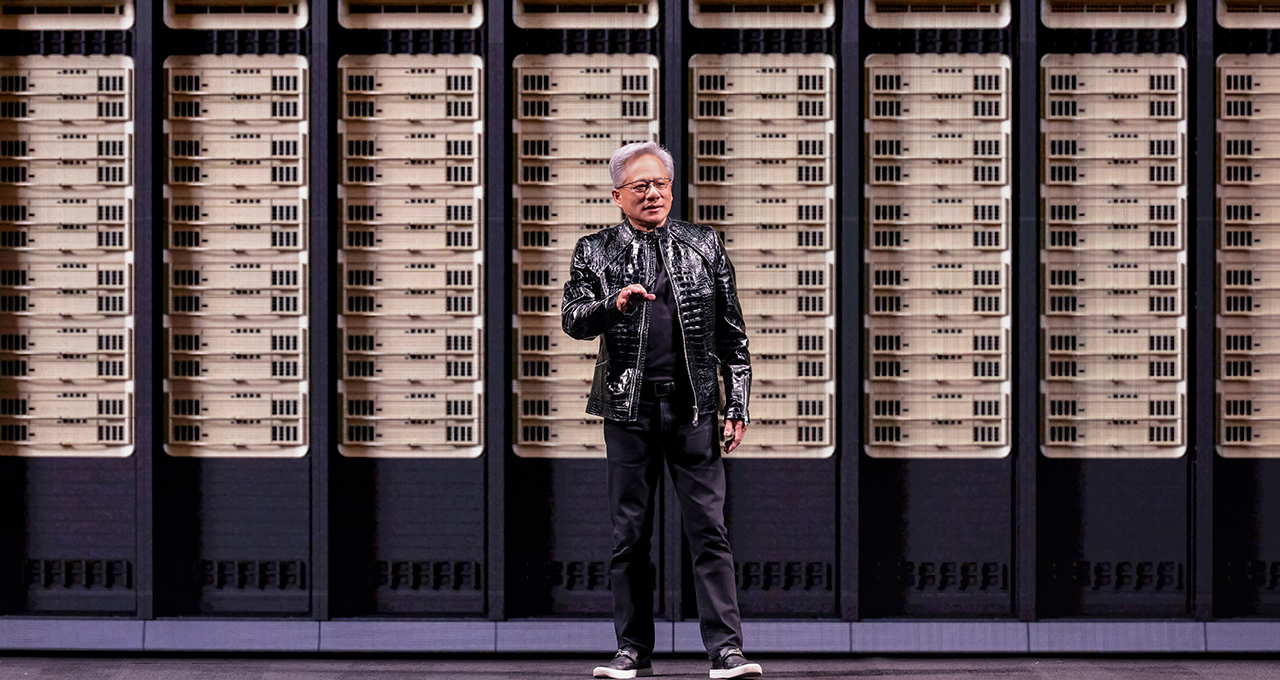
In 2023, the race was: who can train the biggest model?
In 2026, it's: who can run it cheaply at scale?
The money is still pouring into AI— but the target moved.
2023–2025 was the era of buying GPUs for training. 2026 is the year budgets, architectures, and data centers get rebuilt around inference at scale—serving tokens, running agents, keeping latency low.
CapEx headline
$600B+
2026 projected capex for the "top 5" hyperscalers (CreditSights estimate).
Spend mix
~75%
Estimated share of 2026 hyperscaler capex tied to AI infrastructure.
Workload shift
~⅔
Inference share of compute in 2026 (up from ~⅓ in 2023).
TL;DR
The "CapEx shift" in 2026 is less about spending less on training and more about spending intelligently on deployment: inference servers, networking, caching, and power/cooling that make AI feel instant—and cheap—at massive scale.
Four things that changed in 2026:
- • CapEx is exploding — utility-scale buildout, not software margins
- • Inference dominates — always-on agents make latency the new bottleneck
- • Architecture shifts — from mega-clusters to distributed "inference grids"
- • Chips diversify — NVIDIA + Google + Amazon all competing on cost-per-token
The key insight:
Training creates the models. 2026 is about scaling deployment infrastructure.
Today's headline (Jan 12, 2026)
Meta announced "Meta Compute," describing plans to develop tens to hundreds of gigawatts of AI infrastructure over the decade—underscoring how power is becoming the pacing item for AI scale.
What counts as "CapEx" in these charts?
Different companies report capex differently (e.g., including finance leases). The figures here rely on published estimates and company commentary; treat them as directional for strategy, not as audited, apples-to-apples accounting.
What is an "inference grid"?
A distributed footprint of inference capacity across regions/metros/edge sites designed to minimize latency, maximize utilization, and keep costs predictable—often using different chips and cooling than training clusters.
The $600B+ CapEx moment
One way to grasp the scale: AI capex has become a macroeconomic force. CreditSights projects the top-5 hyperscalers will spend roughly $256B (2024) → $443B (2025) → $602B (2026)—a 135% increase in two years.
Source: CreditSights "Technology: Hyperscaler Capex 2026 Estimates" (published Nov 10, 2025).
Individual company guidance (2026)
- Amazon: ~$118B projected, with AWS AI infrastructure as the primary driver
- Microsoft: ~$103B projected, up 74% YoY in recent quarters
- Alphabet: ~$78B projected, after three upward revisions in 2025
- Meta: ~$65B projected, with Zuckerberg citing AI as "very likely to be profitable"
Source: Company earnings calls, Goldman Sachs estimates
Where the money goes
CreditSights estimates ~75% of 2026 hyperscaler capex is tied to AI infrastructure—roughly $450B.
"AI infrastructure" here includes AI-optimized compute and related data center/networking buildout.
A subtle (but important) financing change
The five biggest AI spenders raised a record $108B in debt in 2025. The breakdown: Alphabet ($38B), Meta ($30B), Oracle ($18B), Amazon ($15B), and others.
This signals a shift: companies are borrowing at scale to fund AI infrastructure, betting future returns will justify the debt load.
Source: InvestmentNews (Bloomberg), Nov 2025.

So what does all this spending mean for profitability? That's where capital intensity comes in. Unlike software (which scales almost for free), AI infrastructure has massive upfront costs. When 35–50% of revenue goes to building data centers, the economics look less like SaaS and more like utilities—think electric grids or railroads.
Why investors keep asking "when does this pay back?"
At 35–50% capital intensity, AI infrastructure behaves more like utilities than software. CreditSights' "From Grid to GPU" deck shows these dynamics across top hyperscalers.
Capital intensity varies widely. Oracle is spending 46.5% of revenue on infrastructure—the most aggressive bet. Microsoft and Meta hover around 35%. Amazon and Alphabet are at 17–20%, though Amazon's sheer scale makes that $118B.
Cash flow tells the real story. Most hyperscalers still generate positive cash after capex—Alphabet leads with $73.6B. But Oracle is in negative territory (-$5.9B), borrowing to fund its AI buildout. It's a bet that future AI revenue will justify the debt.
Key numbers at a glance
17% of sales
35% of sales
20% of sales
34% of sales
47% of sales
Source: CreditSights PDF "From Grid to GPU: Risks & Rewards of the AI Investment Race" (Dec 4, 2025). Values shown are rounded for readability.
Why inference wins in 2026
Deloitte expects inference workloads to account for roughly two-thirds of all compute in 2026 (up from about one-third in 2023). That's the "CapEx shift" in one sentence. Source.

Three factors are driving this shift:
- "Always-on" agents — Agentic workflows don't run in one neat request. They loop, call tools, and stay active—keeping chips busy matters as much as raw compute power.
- Test-time compute — "Let the model think longer" improves quality, but turns inference into a real cost center and capacity planning problem.
- Enterprise deployment — In 2026, many orgs move from pilots to production, flipping the ratio from "training for capability" to "inference for ROI."
A mental model
Training is like building a new engine in a lab. Inference is like putting millions of engines into cars and keeping them running in traffic. Scale changes what matters. Latency, reliability, cost-per-output, and energy become first-class product requirements.
This is why 2026 spending looks different: you're not buying one megacluster for training. You're building distributed inference grids, caching layers, and power deals across dozens of locations.
Training clusters → inference grids
Training clusters are built for synchronized throughput (tight interconnect, giant batches). Inference grids are built for latency + cost (distributed, cache-heavy, often mixing different chip types).
Training clusters: the "power plant" model
Training clusters are built like power plants—massive, centralized, and optimized for raw throughput. Thousands of GPUs connected by ultra-fast networking, running one giant synchronized job. They prioritize batch size, chip-to-chip communication speed, and reliable checkpointing.
Inference grids: the "distribution network" model
Inference grids work like electrical distribution networks—spread across many locations, optimized for latency and cost. Instead of one mega-cluster, you're building 10+ footprints: edge servers for fastest response, metro data centers for caching and routing, regional hubs for bulk capacity. More locations = higher total cost, but lower per-user latency.
Latency reality check
Even if the model is "fast," physics isn't. A rough rule of thumb: ~1 ms of one-way latency per ~124 miles of fiber path (order-of-magnitude).
Example: NYC → Chicago
~800 miles
Network round-trip
~13 ms
(before model compute)
vs. local edge
~2 ms
(~50 miles away)
This is why "inference grids" move capacity closer to users—every 100 miles adds ~1.6 ms of network delay.
What changes when you optimize for inference?
- Primary metric: Latency + cost per token (not raw operations/sec)
- Network: Standard internet with smart routing (not ultra-fast chip-to-chip)
- Batching: Small & dynamic, often real-time (not huge batches)
- Uptime: Always-on with multi-region failover (planned downtime not OK)
- Math precision: Lower (8-bit, 4-bit) for speed (not 16-bit)
The deployment spectrum
Where you run AI affects speed, cost, and capability. Most deployments mix 2–3 tiers.
- On-device / Edge: Fastest response (~7-18ms), highest cost, smaller models (7-13B params)
- Metro / Regional: Balanced (~25-40ms), medium cost, larger models (24-48B params)
- Central / Frontier: Slowest (~60-80ms), lowest cost, largest models (70-90B+ params)
Key insight: fastest response = highest cost. Lowest cost = slowest response. The art is picking the right mix.
Silicon: GPU + ASIC era
Training still loves general-purpose GPUs (like NVIDIA's). Inference loves whatever is cheapest per token—often pushing hyperscalers toward custom chips. CreditSights estimates Google's TPU chips have a ~40% lower total cost of ownership than NVIDIA's latest GB200 systems for inference workloads.
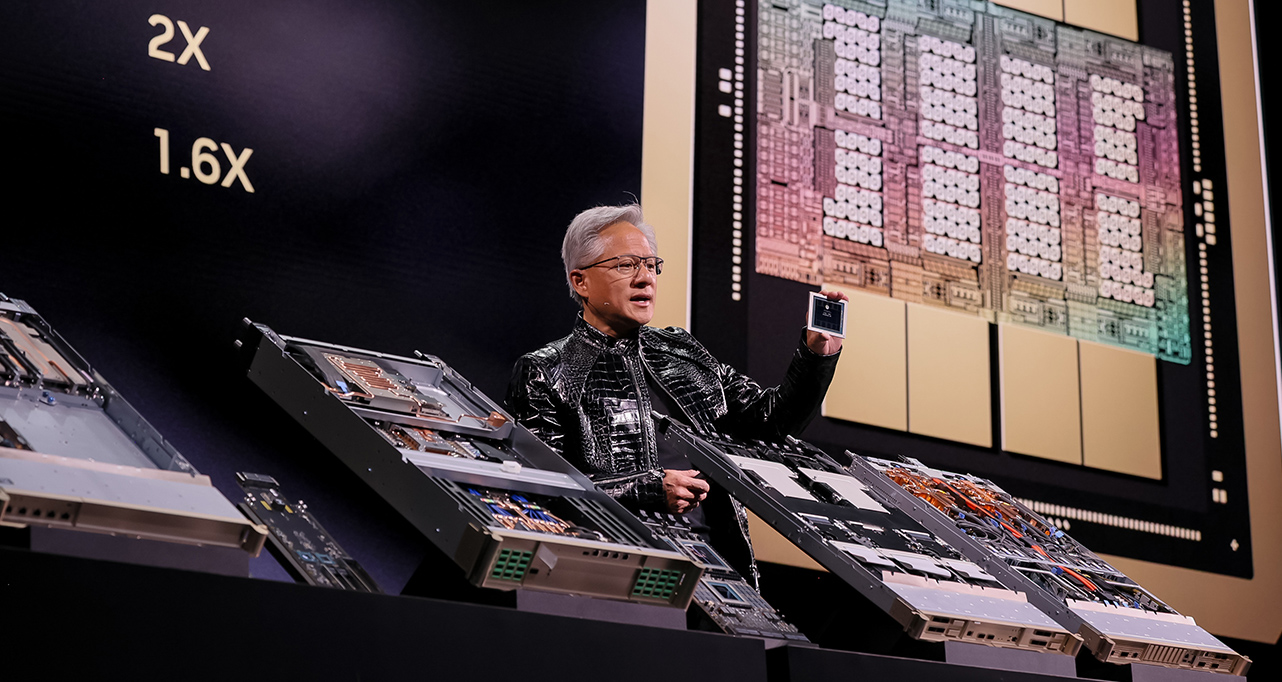
Training chips optimize for throughput and memory bandwidth—they're designed to crunch through massive matrix operations as fast as possible. Flexibility matters because training workloads change frequently.
Inference chips prioritize latency, cost per token, and energy efficiency. They trade flexibility for better economics on the specific math operations that dominate inference. Custom ASICs (like Google's TPUs) can be 40% cheaper per token than general-purpose GPUs.
Quick take: why custom silicon keeps growing
- • When inference becomes 24/7, utilization and power matter as much as speed.
- • Custom chips (ASICs) trade flexibility for better cost-per-token on the core AI math operations.
- • Mixed chip fleets (NVIDIA + Google + Amazon + others) let software route each request to the cheapest option that's good enough.
One number to remember
~40%
Estimated cost savings (Google TPU vs NVIDIA GPU systems), per CreditSights.
A note on "who wins"
This isn't "GPUs vs ASICs." It's a segmentation story: GPUs dominate frontier training and premium inference; ASICs gain share where cost, power, and tight workload specialization win.
Power & cooling become product constraints
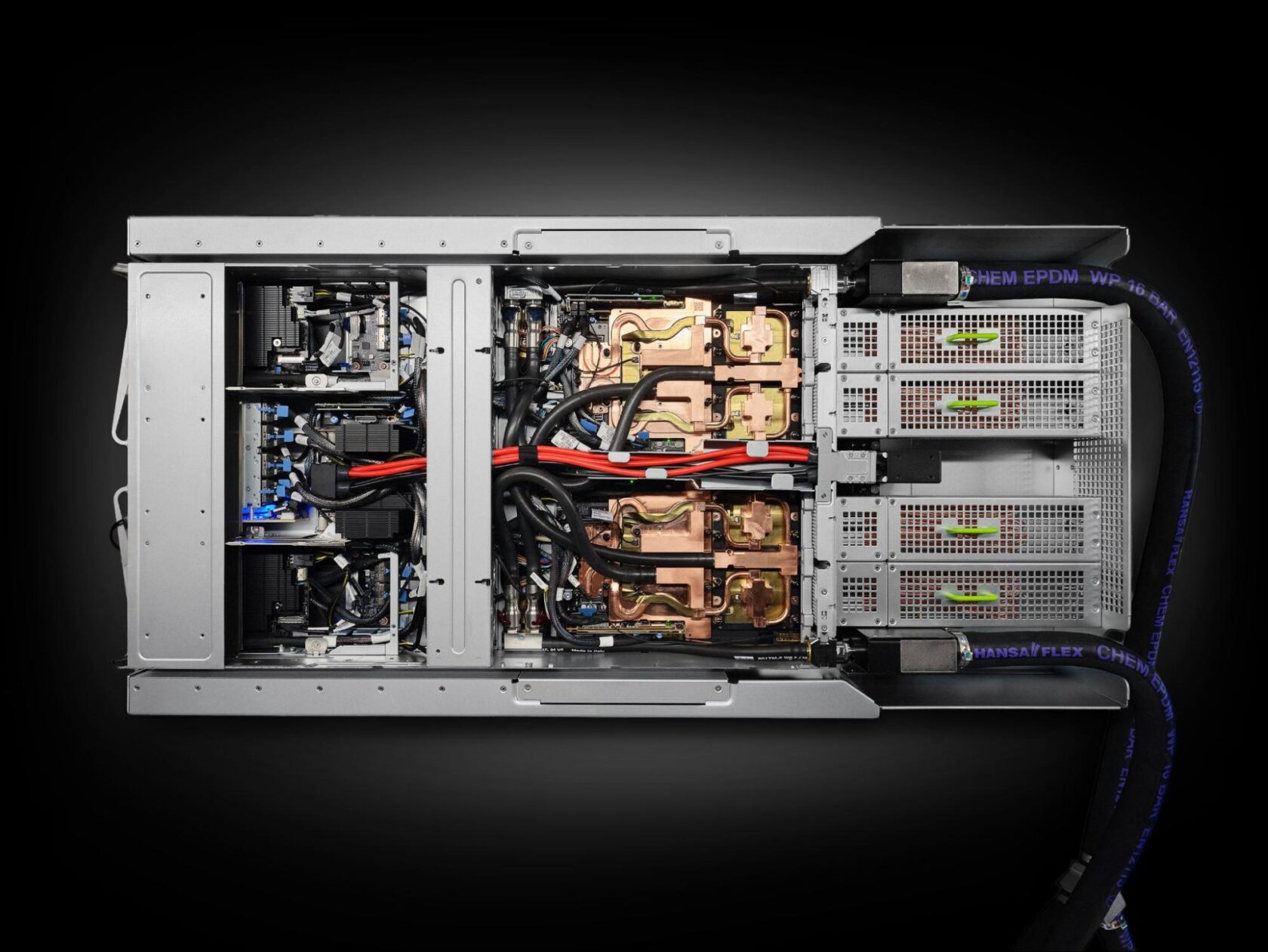
IEEE Spectrum highlighted how rack densities are jumping from ~8 kW (typical) toward ~100 kW for AI, which is why liquid cooling is moving from "niche" to "default" for new builds.
Source: IEEE Spectrum (Oct 2025) and JLL's 2026 data center outlook (both discuss 100 kW-class rack densities and liquid cooling).
Why this matters for "inference grids"
If training is a few megasites, you can solve power with bespoke deals. If inference becomes a widespread grid, power becomes a portfolio problem: site selection, utility queues, retrofits, and energy contracts.
Speed
Deploy where power exists
Resilience
Multi-region failover
Cost
Power is your COGS
Politics
Permits + local pushback
A quick operator heuristic
If your AI feature depends on sub-second responsiveness, you are—whether you like it or not—buying some form of edge/metro capacity. That "grid" footprint is exactly what's driving the CapEx shift.
Case study: Stargate
OpenAI's Stargate project is the clearest example of the shift from "buy chips" to "build the utility." At gigawatt scale, GPUs aren't the constraint anymore—power, cooling, land, and financing are. Stargate's $500B commitment isn't just buying GPUs; it's building power plants, data centers, and regional sites.
What we know (publicly stated)
- • OpenAI announced the Stargate Project as a plan to invest $500B over four years, starting with $100B immediately. OpenAI post.
- • OpenAI later announced five new U.S. sites, bringing Stargate to nearly 7 GW of planned capacity and $400B+ in investment over the next three years. OpenAI post.
- • "Stargate UAE" (Abu Dhabi) is planned as a 1 GW cluster with an initial 200 MW phase expected to go live in 2026; the broader campus is described as up to 5 GW. OpenAI post.
- • In Jan 2026, Reuters reported OpenAI and SoftBank investing $1B into SB Energy to support a 1.2 GW data center tied to Stargate.
Capacity chart uses headline figures from OpenAI and Reuters reporting; "planned" ≠ "delivered."
Stargate timeline (high level)
Jan 2025
OpenAI announces "Stargate" ($500B / 4 years; $100B immediate).
May 2025
OpenAI announces Stargate UAE (1 GW cluster; first 200 MW in 2026).
Sep 2025
OpenAI announces five new U.S. Stargate sites; nearly 7 GW planned.
Jan 2026
Reuters: OpenAI + SoftBank invest $1B into SB Energy for a 1.2 GW data center (Stargate buildout).
Why Stargate matters for the "CapEx shift"
Stargate is a visible example of the industry moving from "buy chips" to "build the utility." Once you're at gigawatt-scale, the limiting factors are no longer only GPUs—it's power, cooling, land, financing, and time-to-permit.
What to watch: Signs of who's actually ready
You don't need to be a data center engineer to spot who's prepared for the AI scale-up. Here are the questions that separate the leaders from the followers—things you can actually look for in news, earnings calls, and product announcements.
- Follow the money: Are they building their own data centers or renting? Are they partnering with energy companies? Are they talking about "power" and "cooling" as much as "chips"?
- Speed matters: When you use their AI product, how fast does it respond? Do they mention "edge" or "regional" deployments? Are they building in multiple countries?
- Chip strategy: Are they making their own chips (Google TPU, Amazon Trainium)? Or 100% dependent on NVIDIA? Do they talk about "cost per query" or just "capability"?
- The real test: Can they explain their AI spending in one sentence? Are they showing profitable AI products, or just promising future returns? When demand spikes, does their service stay fast?
The bottom line
In 2023, the AI race was about who could build the biggest model. By 2026, it's about who can run the model—cheaply, reliably, and close to users.
That shift from training to inference changes everything: where the money goes, what chips matter, and how infrastructure gets built. The companies that grasped this early—Microsoft, Google, Amazon—are already building distributed inference grids while others are still buying GPUs for training clusters.
The $600B question isn't "will AI keep growing?" It's: who has the infrastructure to actually deliver it?

Sources & notes
Data sources and references cited throughout this analysis.
CapEx & financing
Inference shift, power & cooling
- Deloitte: "More compute for AI, not less" (2026 predictions)
- IEEE Spectrum: Data center liquid cooling (Oct 2025)
- JLL: 2026 Global Data Center Outlook
Stargate
- OpenAI: Announcing the Stargate Project (Jan 21, 2025)
- OpenAI: Five new Stargate sites (Sep 23, 2025)
- OpenAI: Introducing Stargate UAE (May 22, 2025)
- Reuters: OpenAI + SoftBank invest $1B into SB Energy (Jan 9, 2026)
- Reuters: Stargate UAE to begin operation in 2026 (May 22, 2025)